Thinking about building new on Fort Myers Beach? You are not alone. The island is rebuilding with care, and the rules can feel technical fast. With the right plan, you can protect your investment, streamline permitting, and design a home that is both beautiful and resilient. This guide walks you through the essentials for 33931, from flood elevation and permits to coastal controls, insurance, and practical checklists. Let’s dive in.
Fort Myers Beach basics you should know
Fort Myers Beach sits almost entirely in FEMA Special Flood Hazard Areas, which means elevation and flood‑resistant design are central to any new build or major renovation. The Town requires finished floors at Base Flood Elevation plus 1 foot of freeboard for new construction and substantial improvements. You can review local permitting and floodplain FAQs on the Town’s site to understand the 50 percent rule and how it is applied in practice. See the Town’s Building Services and Permitting FAQs.
Florida also enforces the statewide Florida Building Code. The current triennial update is the 8th Edition (2023), effective December 31, 2023. Confirm which edition applies to your permit date by reviewing the state’s 2023 Florida Building Code workplan and asking the Town before submitting.
Permits, timelines, and recent enforcement
Post‑Ian processing and what to expect
The Town moved to an online IWorQ portal to handle high post‑Ian volume and has used third‑party reviewers to manage demand. For full new builds or significant projects, expect longer review times and more detailed floodplain checks. The Town’s permitting FAQs explain how to check status and which forms are required.
FEMA probation and insurance impacts
FEMA placed Fort Myers Beach on NFIP probation effective November 18, 2024 due to post‑Ian permit and recordkeeping gaps. That action temporarily removed CRS discounts and added a surcharge to NFIP policies. FEMA later notified the Town on April 28, 2025 that it had met the requirements to be removed from probation effective November 18, 2025. You can review local reporting that summarizes the timeline in this Fort Myers Beach Talk coverage. Always verify current status when you request quotes, since community actions can affect discounts and surcharges.
Flood zones, BFEs, and elevation
How to confirm your flood zone and BFE
Start with FEMA’s Flood Map Service Center. Enter the full address, confirm the Town and ZIP, and note the flood zone and Base Flood Elevation. This is the foundation for design and permitting. Use the FEMA Flood Map Service Center to pull the map, then ask a surveyor for an Elevation Certificate to document first‑floor height relative to BFE.
Elevation Certificates and Risk Rating 2.0
NFIP’s Risk Rating 2.0 uses property‑specific factors like distance to water, flood type, and first‑floor height to price policies. An Elevation Certificate is not required for every new policy, but it can still lower a premium if it proves your home sits higher than FEMA’s model assumes. The Town explains local Elevation Certificate practices on its Elevation Certificates page. For what drives NFIP pricing, review FEMA’s agent guidance on Risk Rating 2.0 factors, then get written quotes with and without an EC to see the difference.
Coastal controls and siting basics
Florida’s CCCL and dune protections
If a lot lies seaward of Florida’s Coastal Construction Control Line, you will need separate state authorization and designs that protect dunes and natural beach processes. Before you set your heart on a concept, check your parcel in FDEP MapDirect and talk with your engineer about the CCCL review process. Learn where the line sits and how it is applied using the state’s CCCL program page.
Beach renourishment and berm projects
The Town is implementing near‑ and long‑term shoreline protection work that shapes storm protection for beachfront properties. Ask for the latest maps and as‑builts for the reach of beach near your home site. The Town tracks active phases and funding partnerships on its Beach and Shoreline Projects page.
Design features that add resilience
A coastal home on Estero Island should be engineered for both flood and wind. Key elements to look for in plan sets and on site:
- Pile foundations designed for scour in coastal A or V conditions, rather than fill‑based elevation.
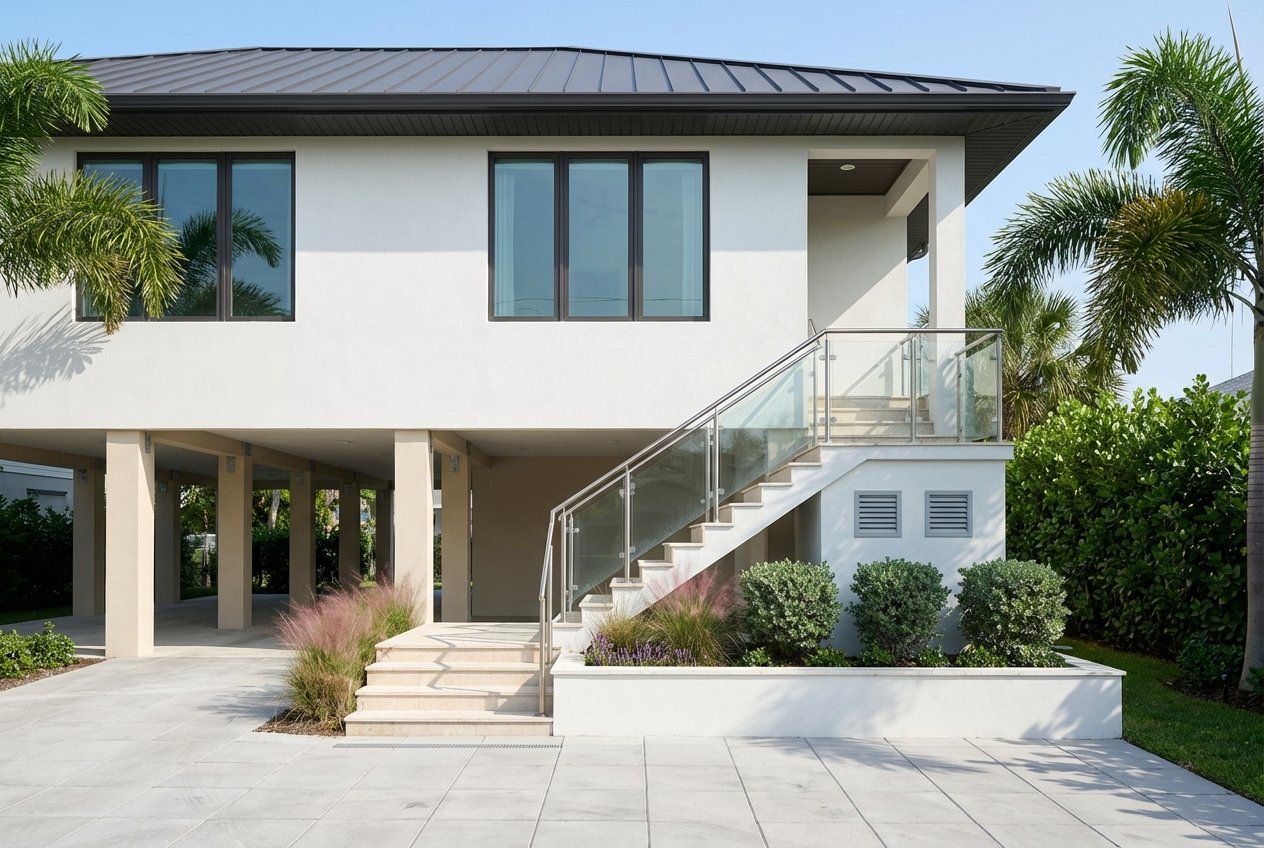
- Elevated lowest habitable floor at or above BFE plus 1 foot freeboard, with no habitable space below BFE.
- Breakaway walls and correctly sized flood openings in enclosures below the elevated floor. FEMA’s technical bulletins explain how these work. Review FEMA’s summary on breakaway walls and openings.
- Utilities and equipment elevated or flood‑protected and not mounted on breakaway walls.
- Wind design that reflects local exposure and product approvals for impact glazing or shutters.
Your architect and engineer will reference ASCE 24 flood‑resistant design and the Florida Building Code. Ask them to identify the assumed flood zone, design flood elevation, and wind exposure in the first pages of the plan set.
Insurance planning for new builds
Flood insurance and homeowners wind coverage are separate. For flood, request both NFIP and private quotes early in design. Ask each carrier how first‑floor elevation, foundation type, and an Elevation Certificate influence pricing. As noted above, community CRS status and FEMA probation timing can affect NFIP surcharges and discounts, so verify current standing when you bind.
For homeowners policies, focus on hurricane deductibles, availability of private carriers, and documented wind‑mitigation features like impact systems and roof‑to‑wall connectors. These details can improve both insurability and pricing in Lee County.
Buyer due diligence checklist
Use this quick list before you make an offer on a lot or a new build in 33931:
- Flood zone and BFE. Pull the map and note the number using the FEMA Flood Map Service Center.
- Elevation Certificate and survey. Ask for the seller’s EC or commission a survey that shows first‑floor height, then compare quotes with and without an EC using FEMA’s Risk Rating 2.0 guidance and the Town’s Elevation Certificates page.
- Permit history and code cases. Search the Town’s IWorQ portal and confirm any substantial damage or improvement determinations. Start with the Town’s permitting FAQs for process and contacts.
- CCCL and beach setbacks. Check whether any part of the lot is seaward of the line using the state’s CCCL resource.
- Foundation and enclosure design. Confirm pile type, flood openings, breakaway wall details, and elevation of mechanicals, and request sealed engineering drawings.
- Local beach projects. Ask the Town for project maps for your beach reach using the Beach and Shoreline Projects page.
- Flood and homeowners quotes. Obtain NFIP and at least one private flood quote, then compare homeowners wind quotes and deductible structures.
Seller preparation checklist
Getting your documentation in order can speed buyer underwriting and support your price:
- Complete permit file. Share stamped plans, final inspections, and any Elevation Certificates. The Town’s permitting FAQs outline records to request.
- Substantial damage and 50 percent documents. Provide any determination letters and cost forms used by the Town.
- Insurance history. Offer flood and wind loss runs and note whether coverage was NFIP, private flood, or both.
- Beach project or easement records. If applicable, provide recorded beach management easements or Town requests noted on the Beach and Shoreline Projects page.
Red flags to investigate
Certain findings warrant a deeper look before you proceed:
- Repairs after Hurricane Ian without permits or missing finals.
- No Elevation Certificate for a home in a Special Flood Hazard Area.
- A parcel that appears seaward of the CCCL without an FDEP authorization.
- Enclosures without flood openings or with unpermitted finished space below BFE.
- Active code enforcement tied to floodplain or coastal rules. Use the Town’s permitting FAQs to find the right contacts.
Long‑term resilience view
For context beyond current codes, review screening‑level sea level rise tools. Barrier islands like Estero Island are sensitive to chronic inundation and increased surge depth over time. The NOAA Sea Level Rise Viewer is a helpful way to visualize scenarios. Explore the Sea Level Rise Viewer resource, then discuss design strategies with your engineer.
Work with a construction‑savvy advisor
New construction on Fort Myers Beach rewards careful planning, strong documentation, and a team that understands flood and coastal requirements. You deserve guidance that blends technical know‑how with a calm, concierge approach. If you are considering a custom build, a major renovation, or a lot purchase in 33931, request a private conversation with Amy Nease. Amy pairs deep construction experience with the global reach of Premier Sotheby’s to help you choose the right site, assemble the right team, and move forward with confidence.
FAQs
What permits do I need for new construction on Fort Myers Beach?
- You will apply through the Town’s IWorQ portal for building and floodplain review, and if your lot is seaward of the CCCL you will also need FDEP authorization. Start with the Town’s permitting FAQs and the state’s CCCL overview.
How does the 50 percent rule affect remodeling in 33931?
- If repair or improvement costs reach 50 percent or more of the building’s pre‑damage market value, the home must be brought into compliance, including elevation to at least BFE plus 1 foot. The Town explains this in its permitting FAQs.
What flood elevation is required for a new home?
- The Town requires your finished floor to be at least BFE plus 1 foot of freeboard. Confirm your parcel’s BFE using the FEMA Flood Map Service Center and document final heights with an Elevation Certificate.
How does FEMA’s probation status affect flood insurance costs?
- While on probation starting November 18, 2024, Fort Myers Beach policyholders lost CRS discounts and faced a surcharge. FEMA’s April 28, 2025 notice set removal effective November 18, 2025. Review local reporting and verify current status when you get quotes.
Do I still need an Elevation Certificate under Risk Rating 2.0?
- Not always, but it can help if your measured first‑floor height is better than FEMA’s model assumes. Ask for quotes with and without an EC and consult FEMA’s Risk Rating 2.0 factors along with the Town’s Elevation Certificates page.
Are beach renourishment or berm projects relevant to my site?
- Yes. These projects shape near‑term coastal protection and can inform design choices. Review the Town’s Beach and Shoreline Projects and ask for the latest maps and as‑builts for your stretch of beach.