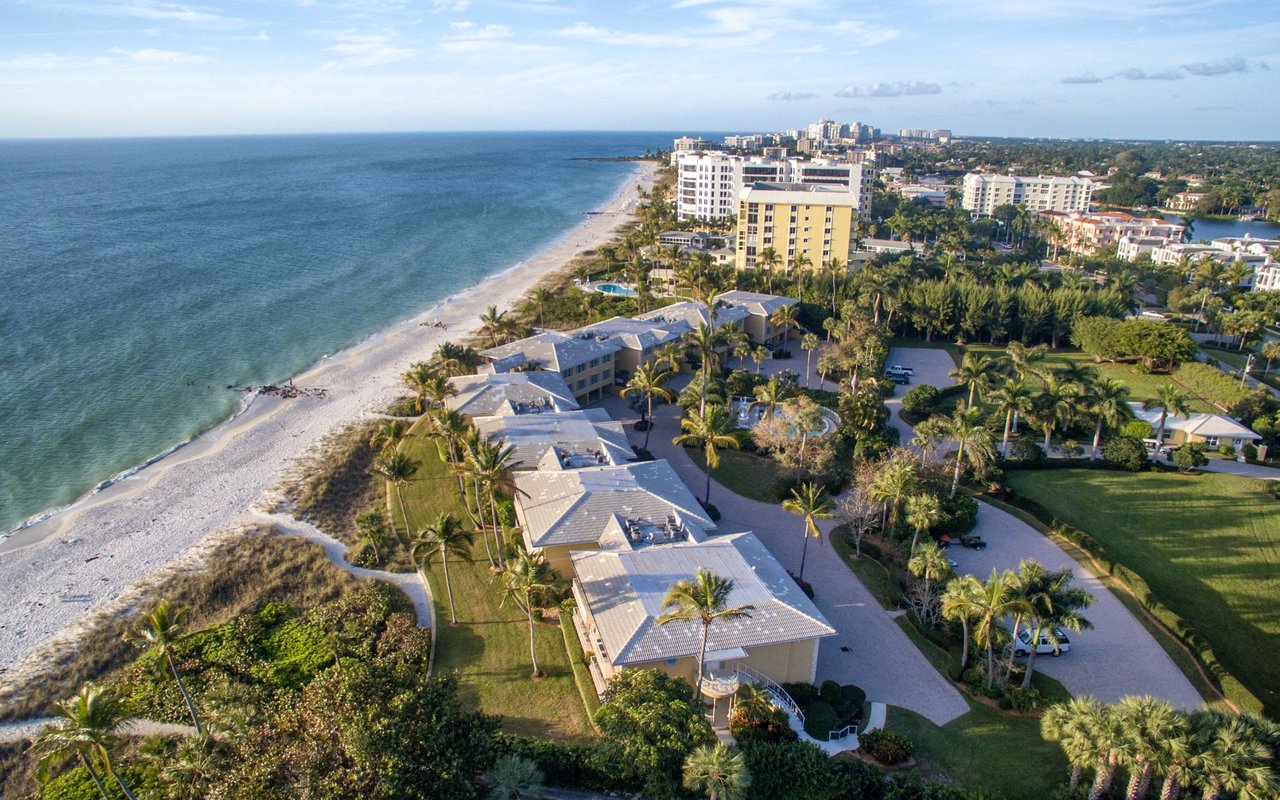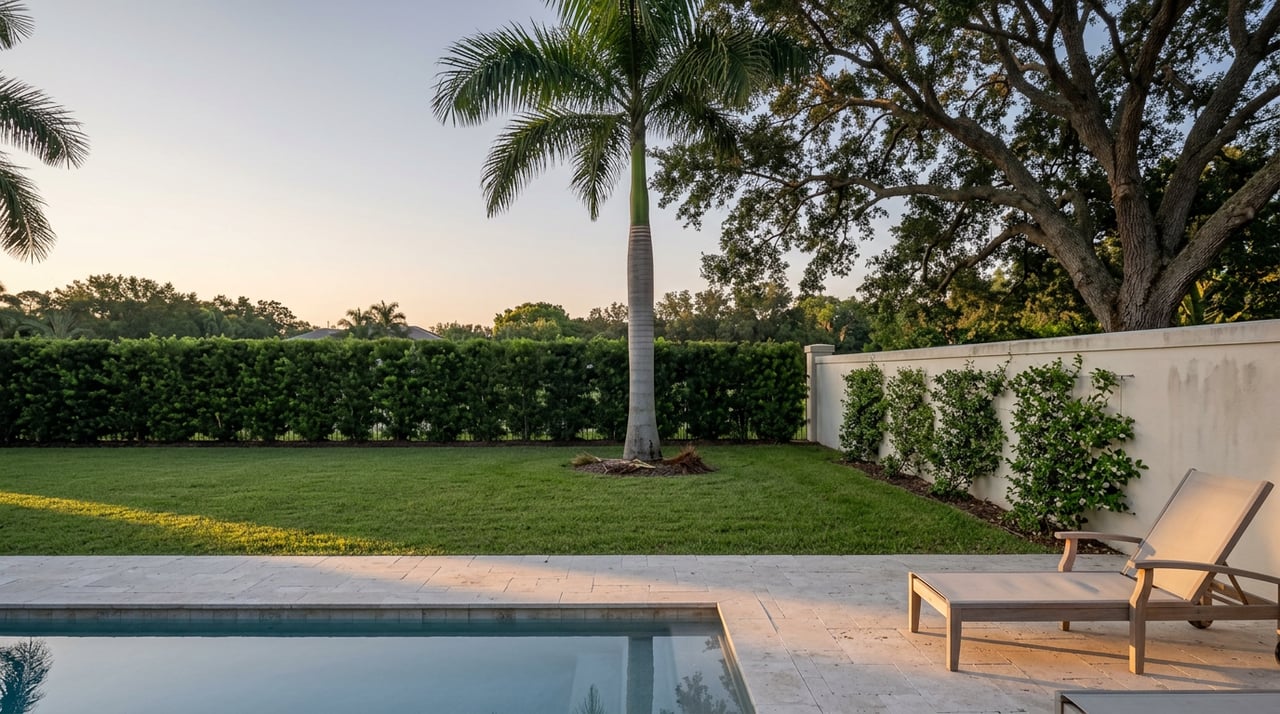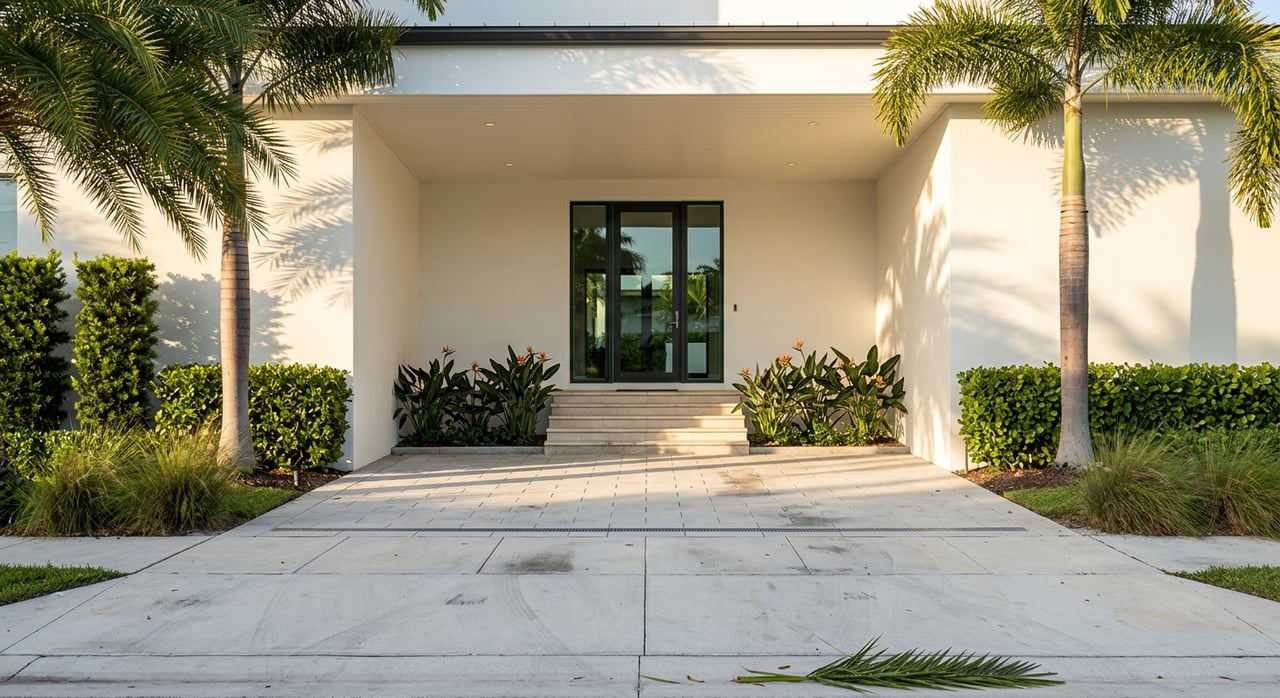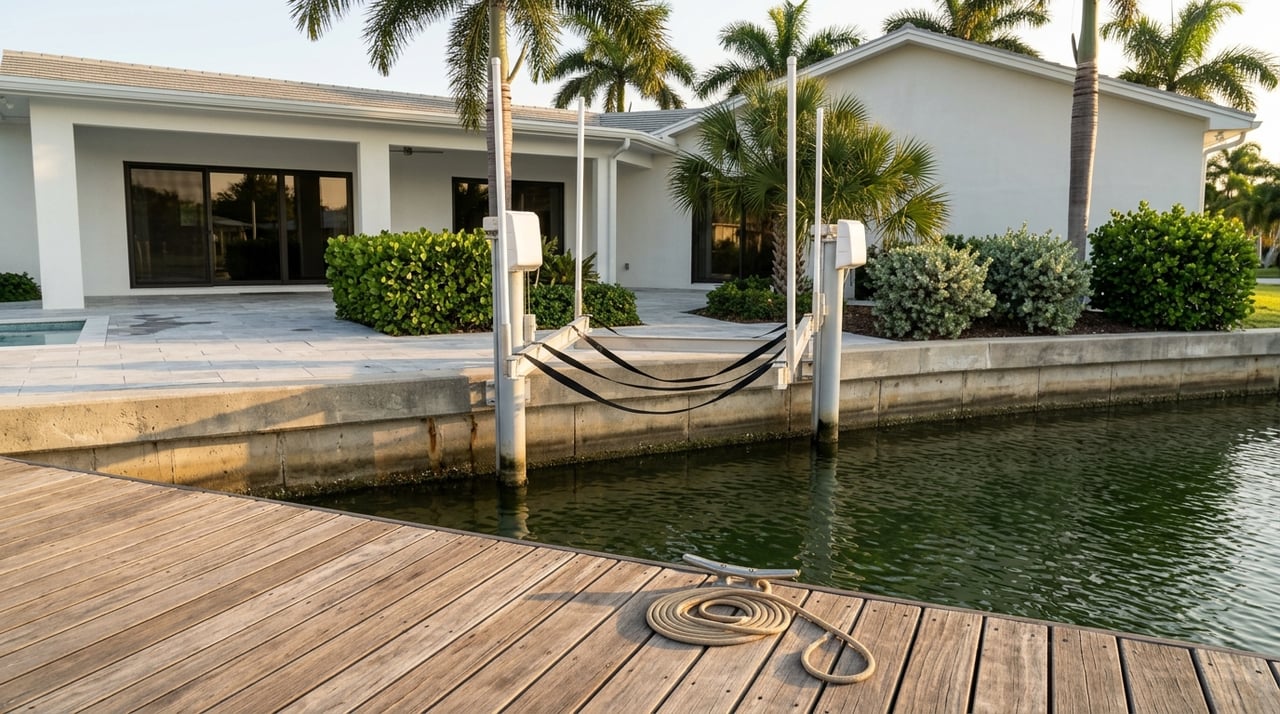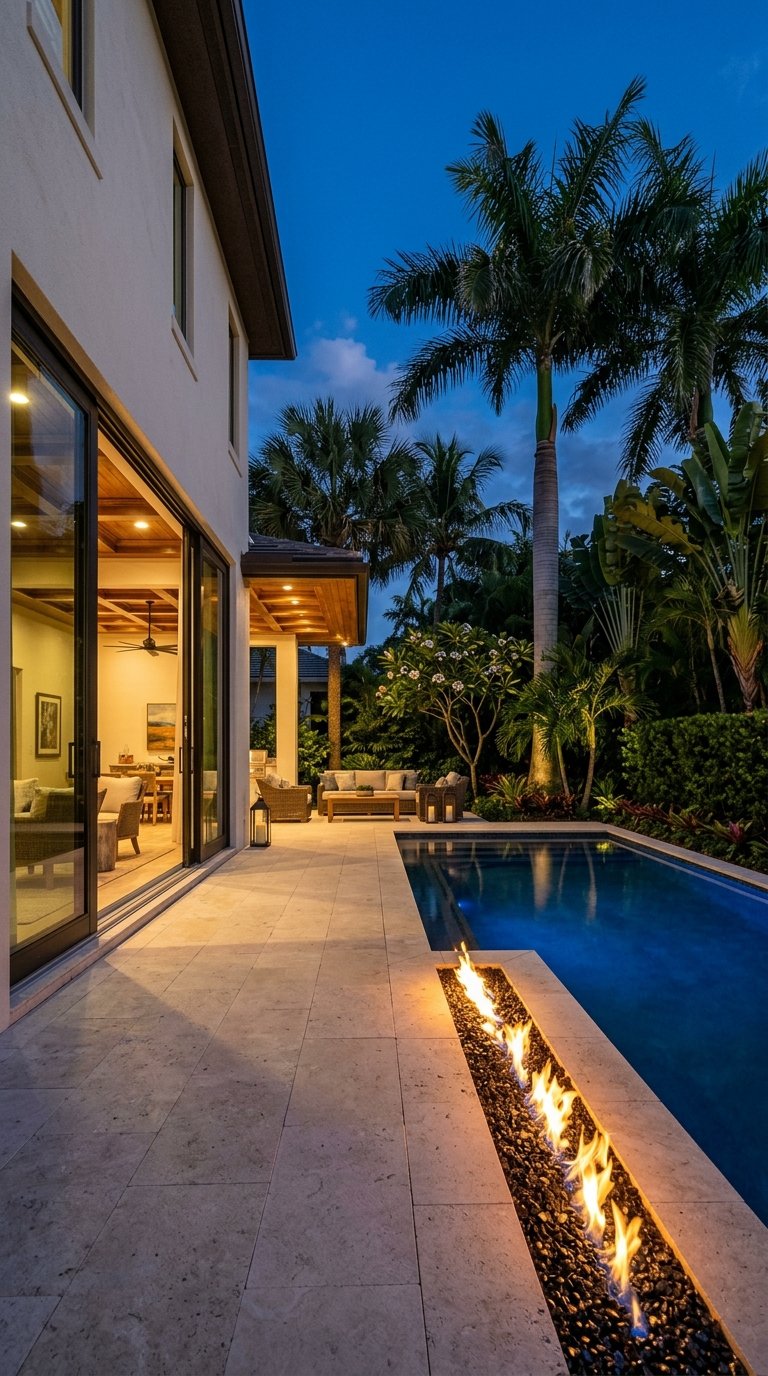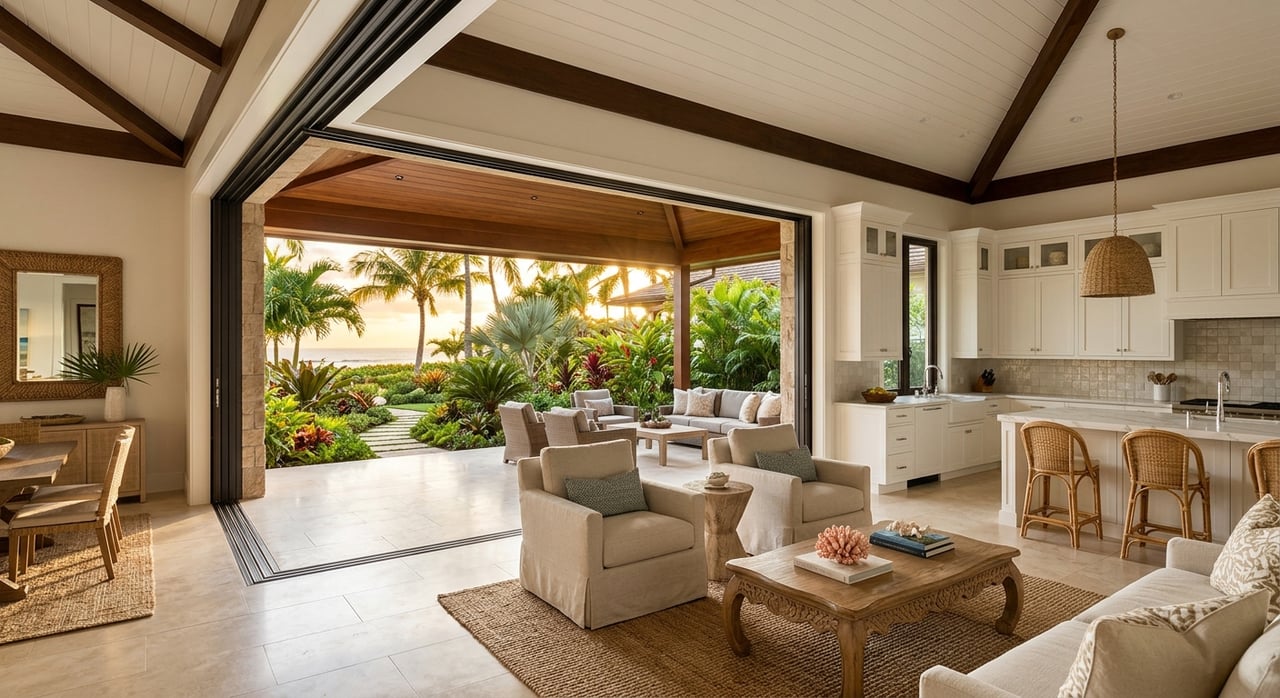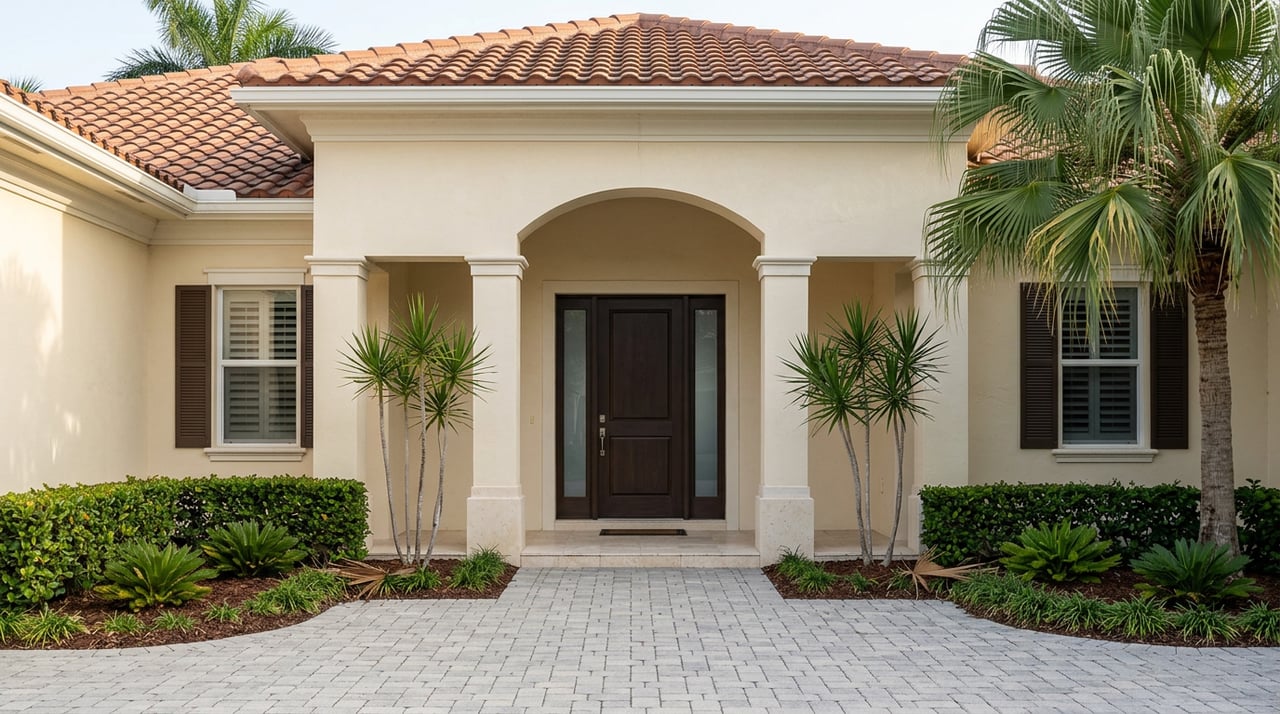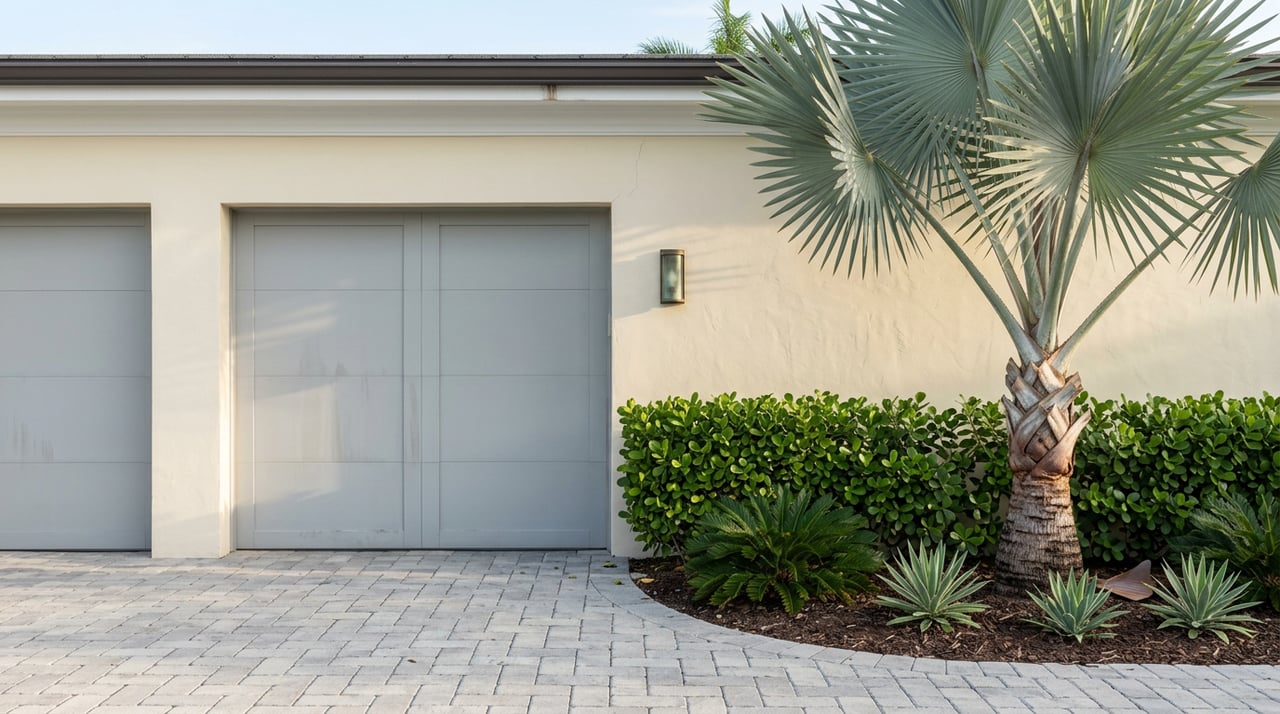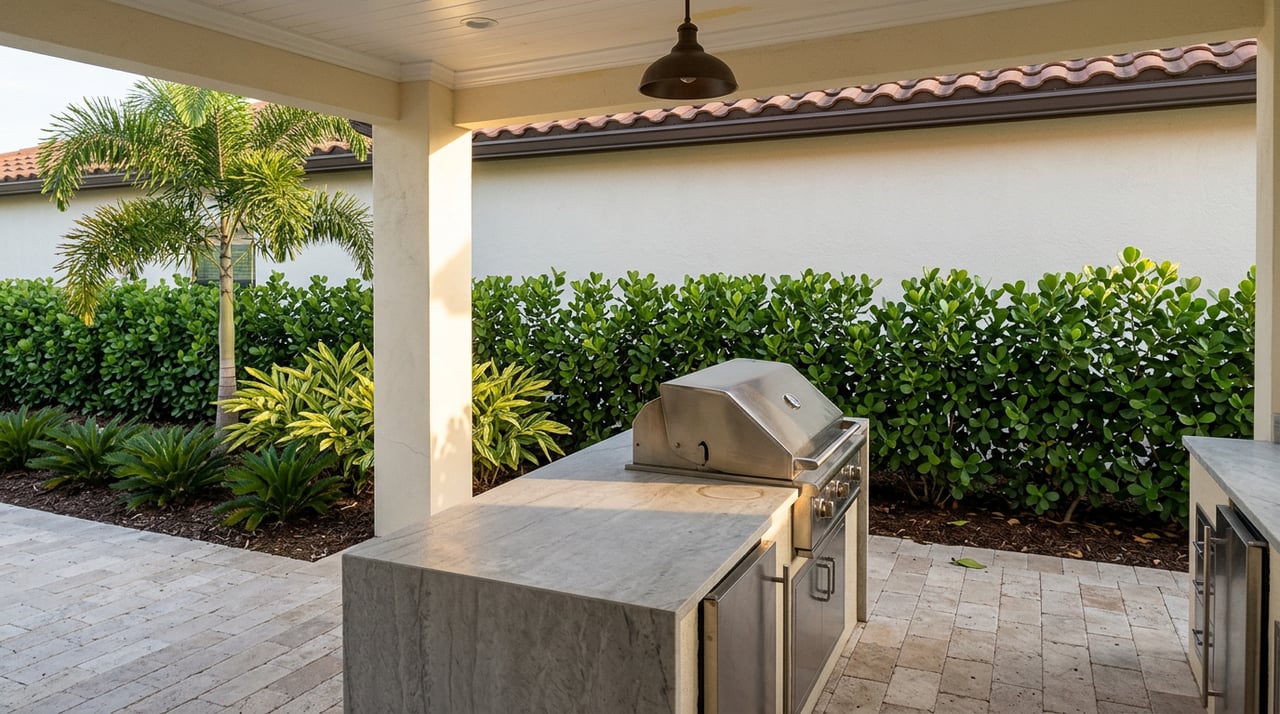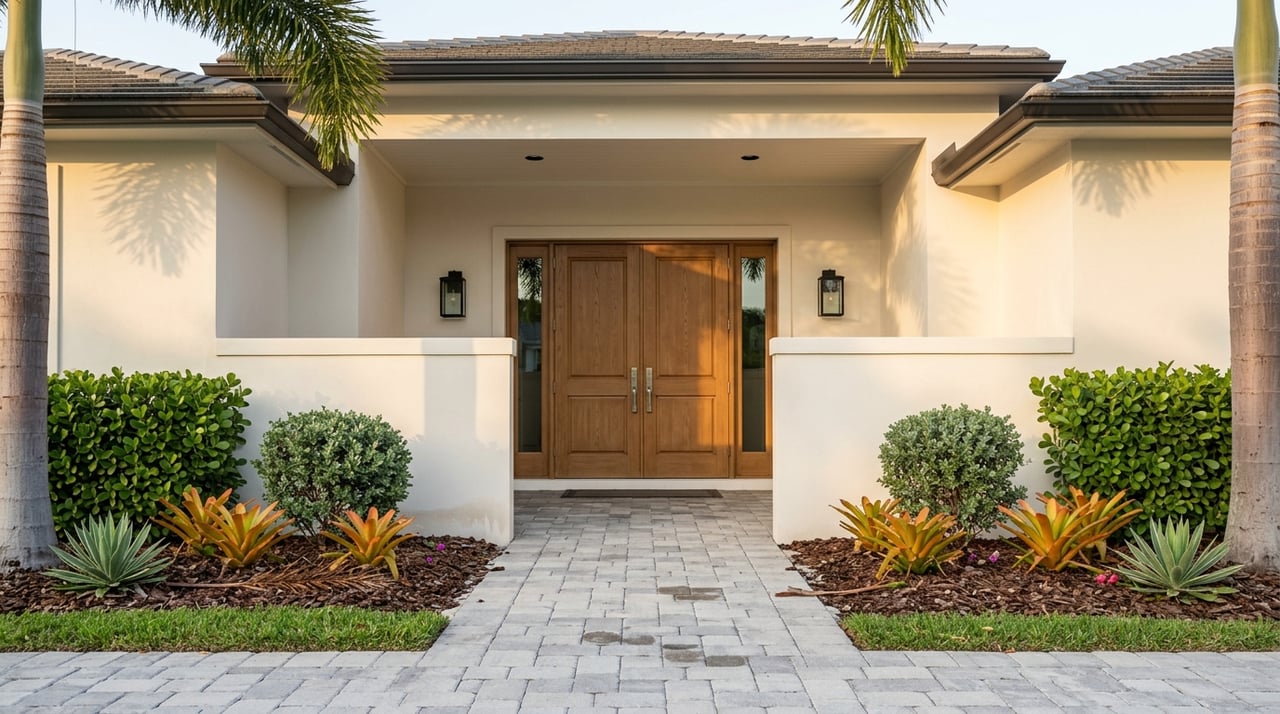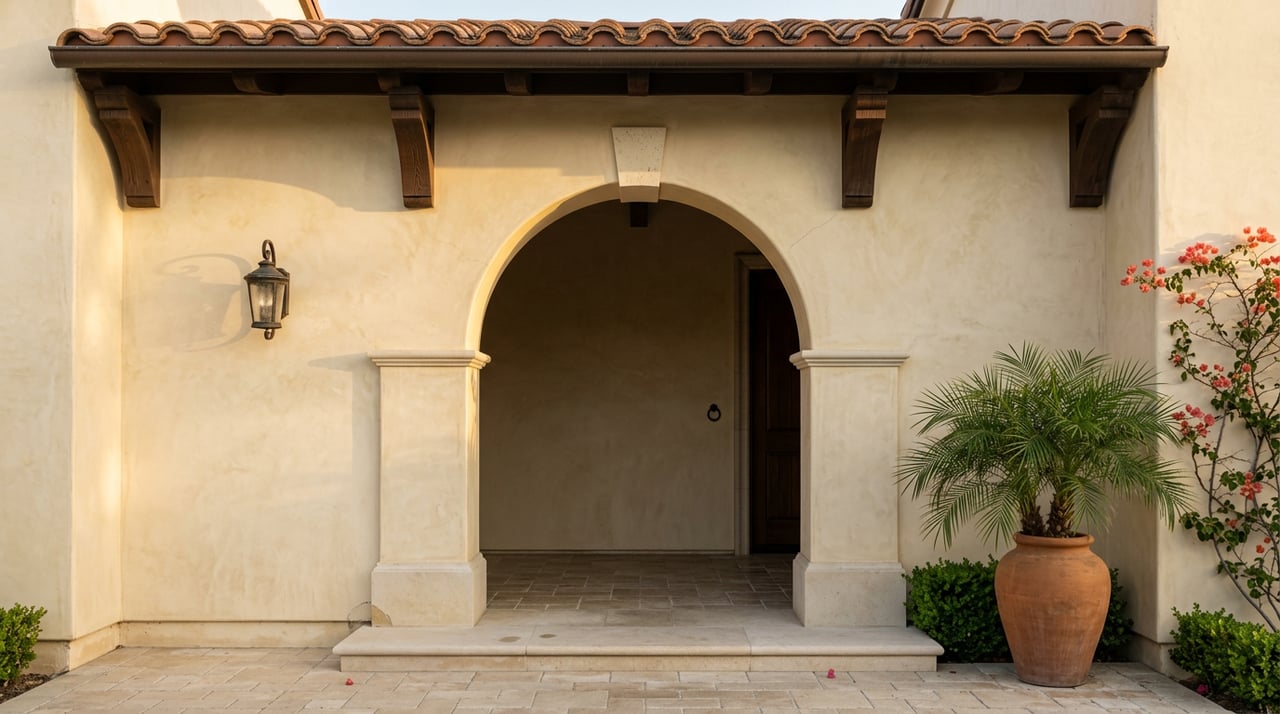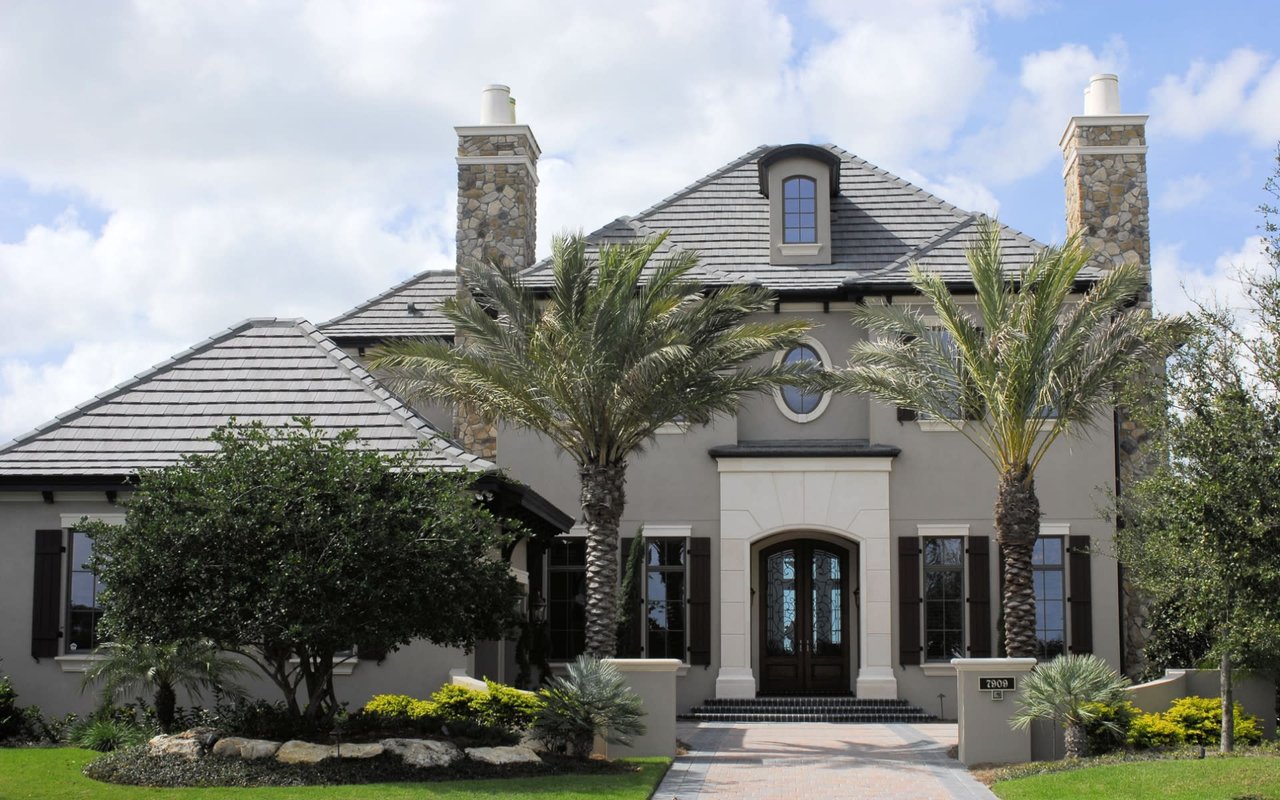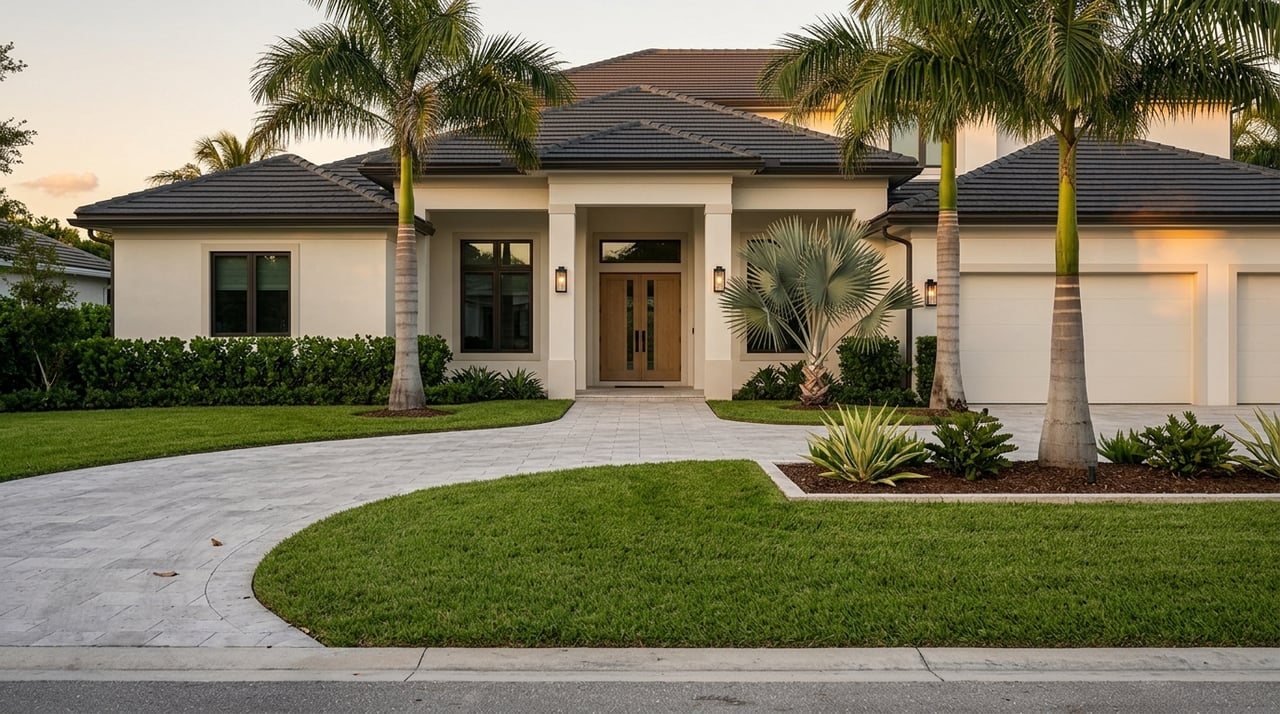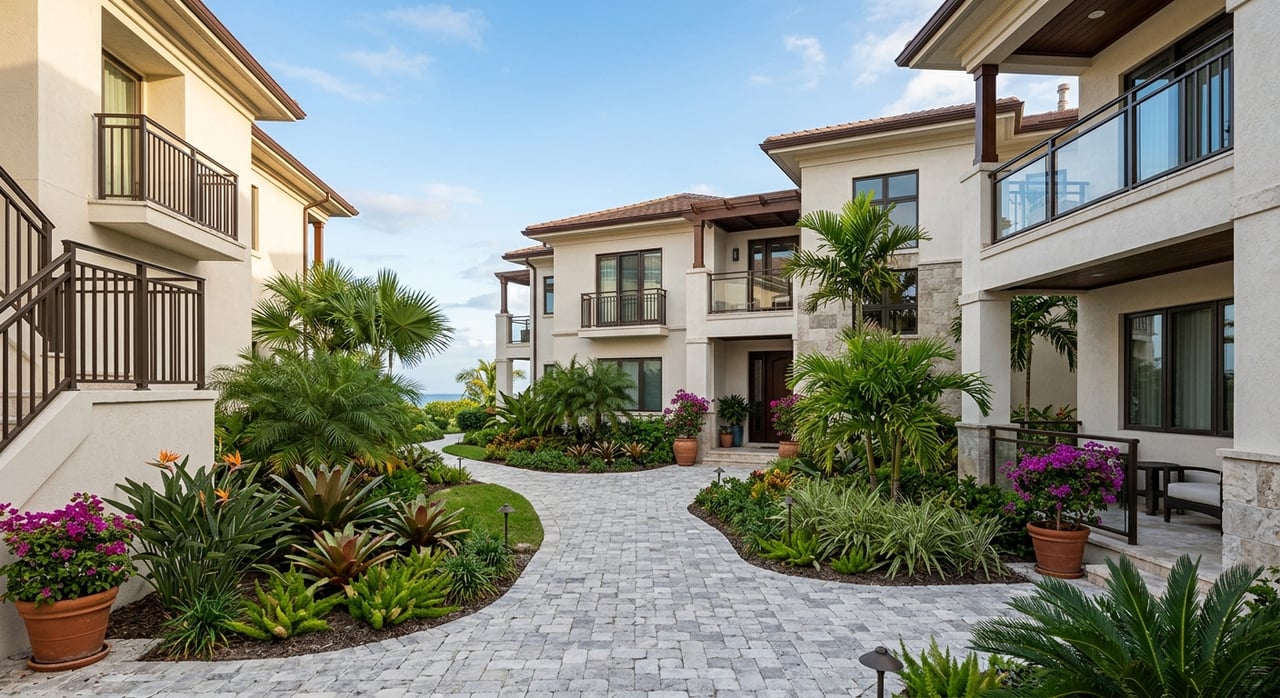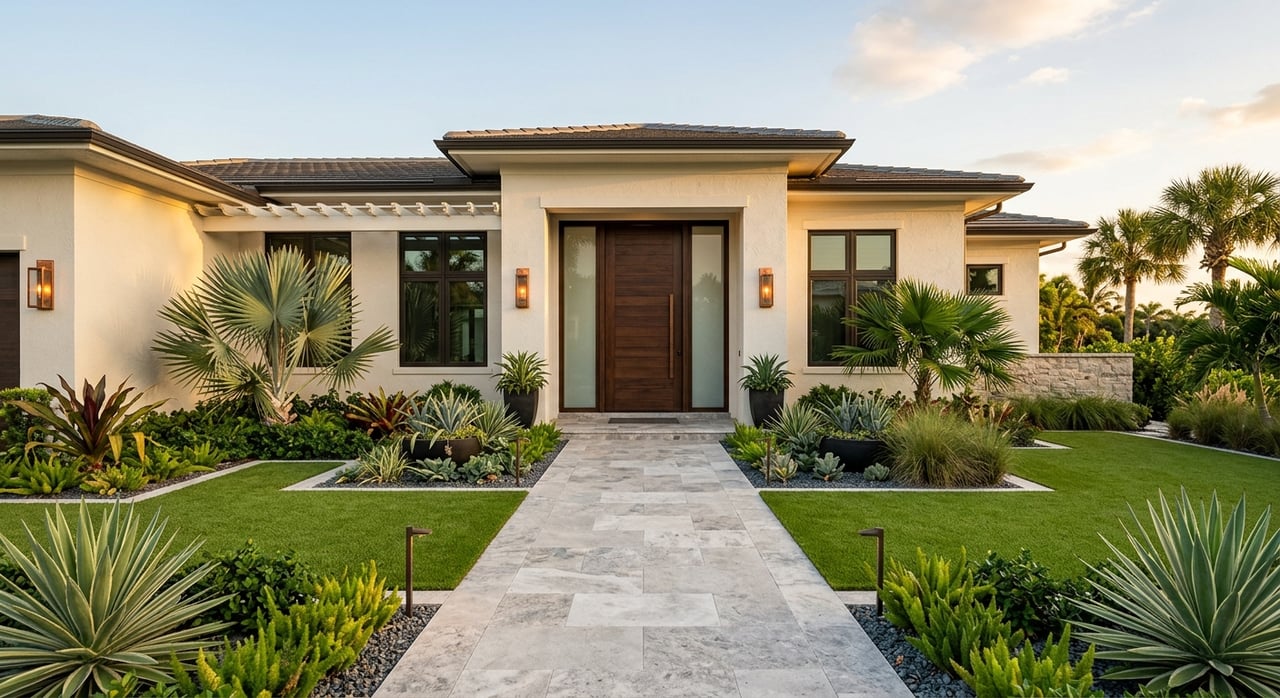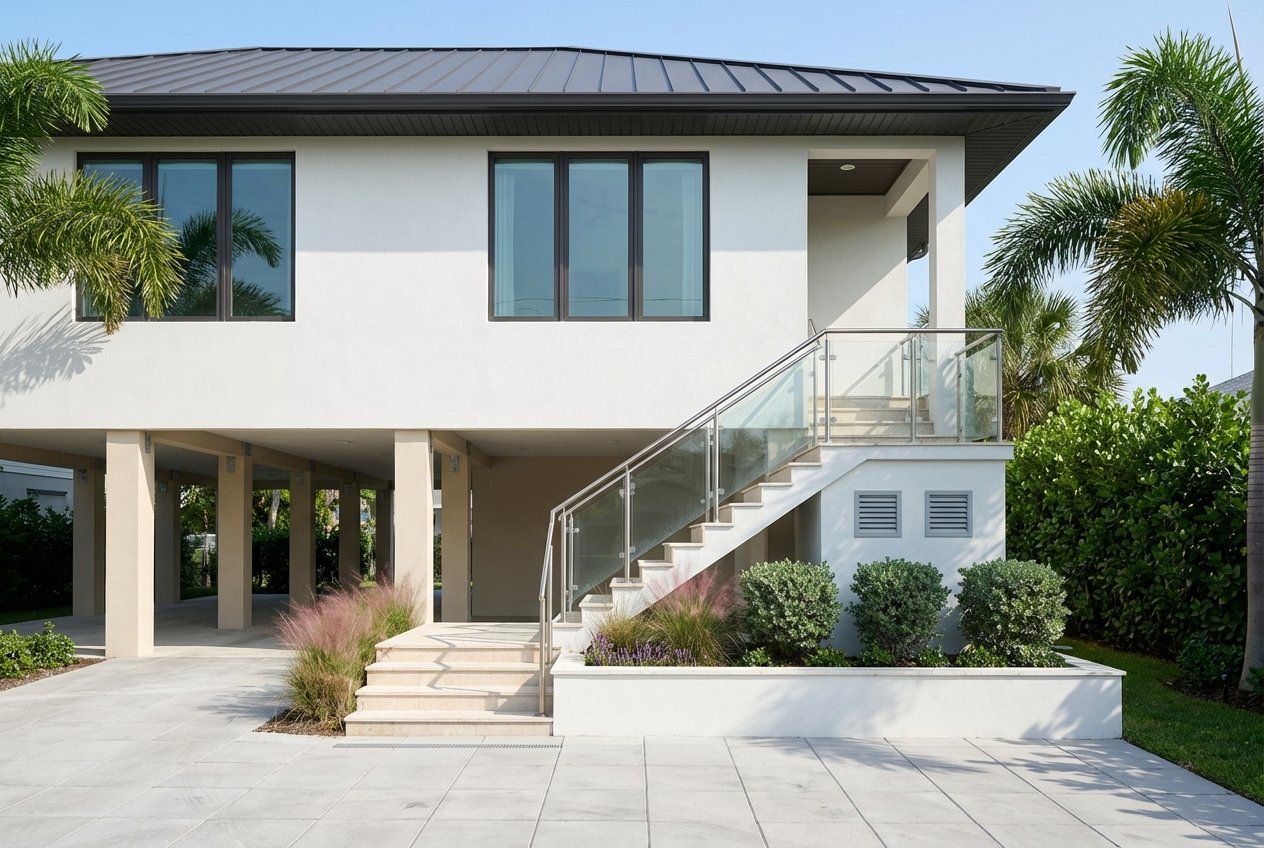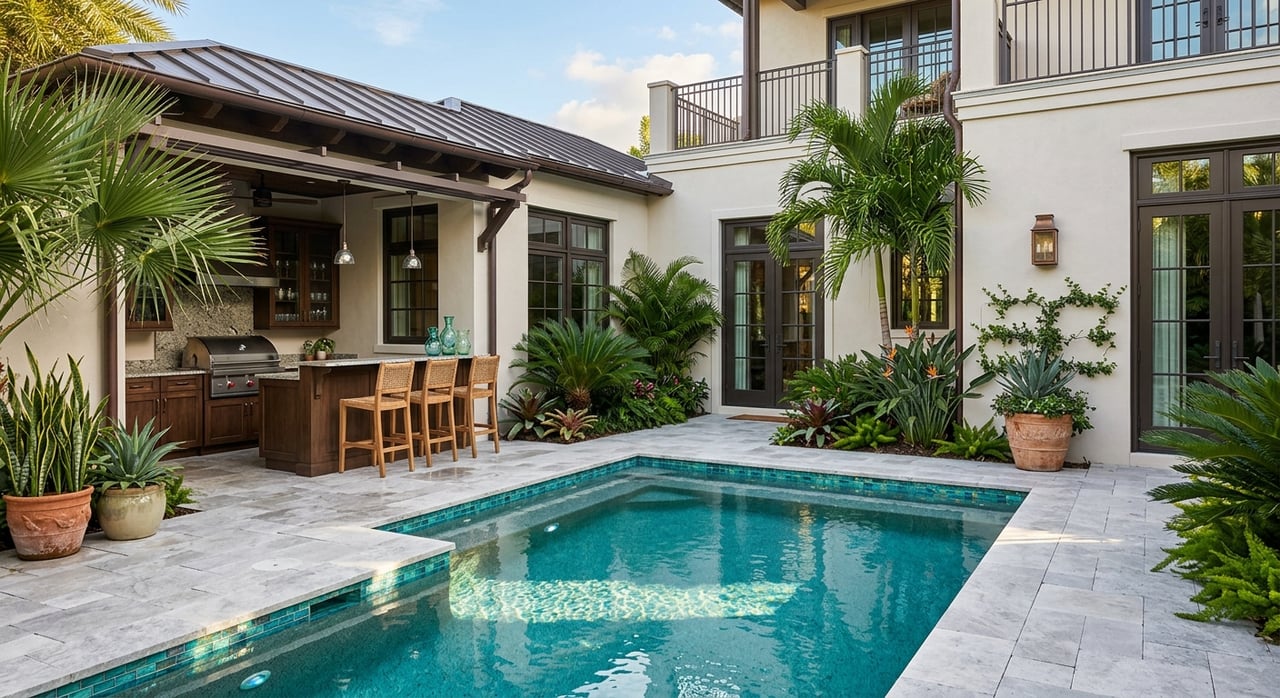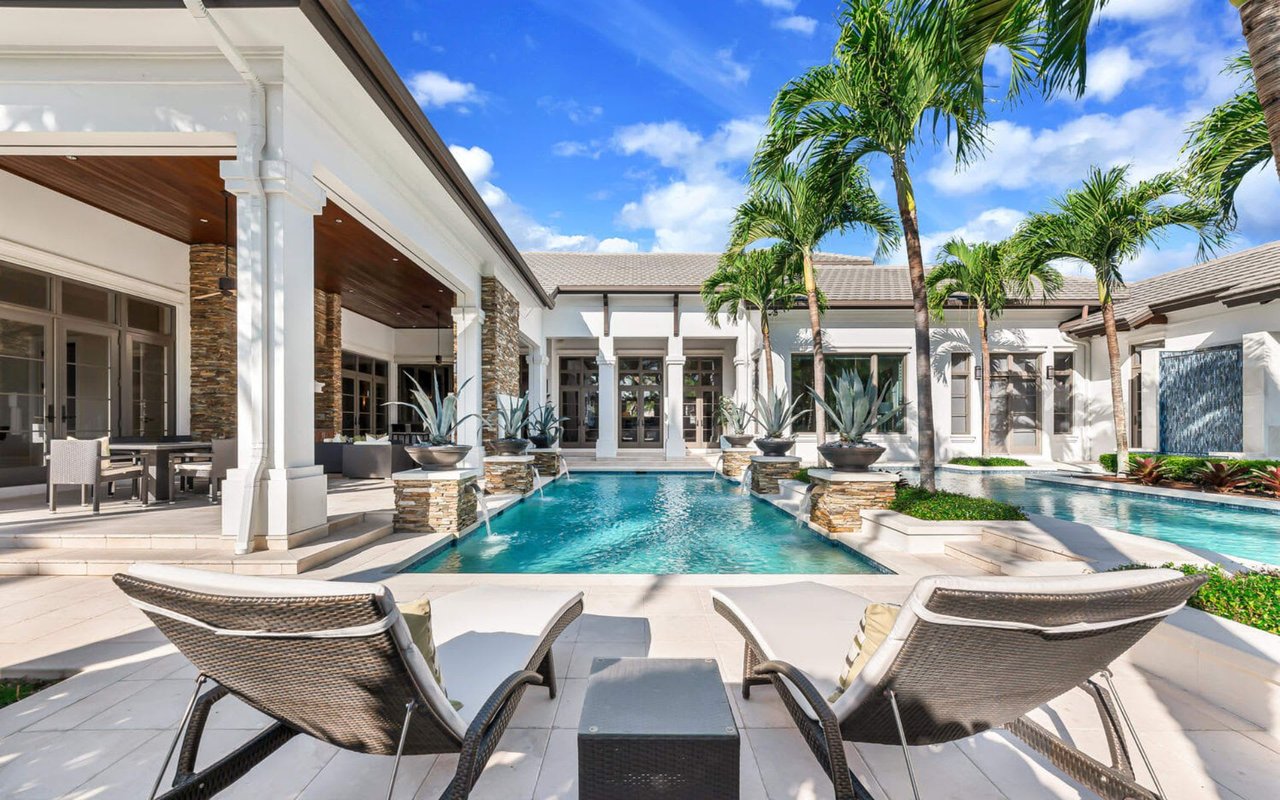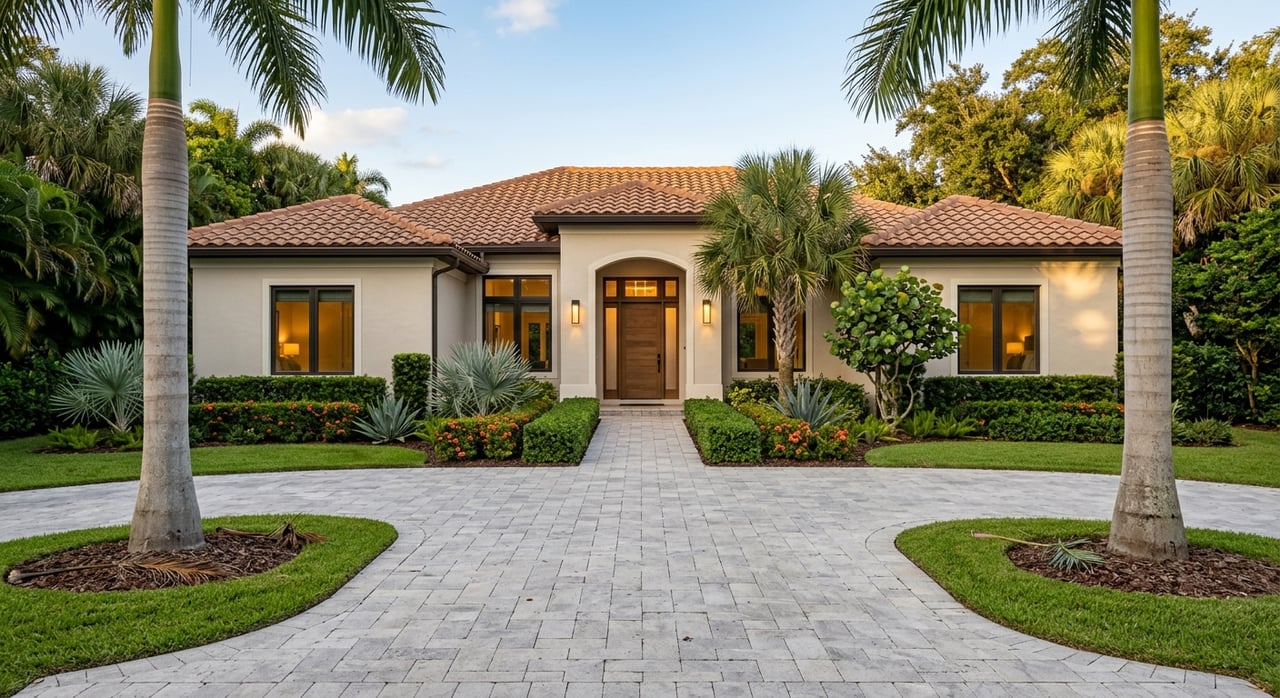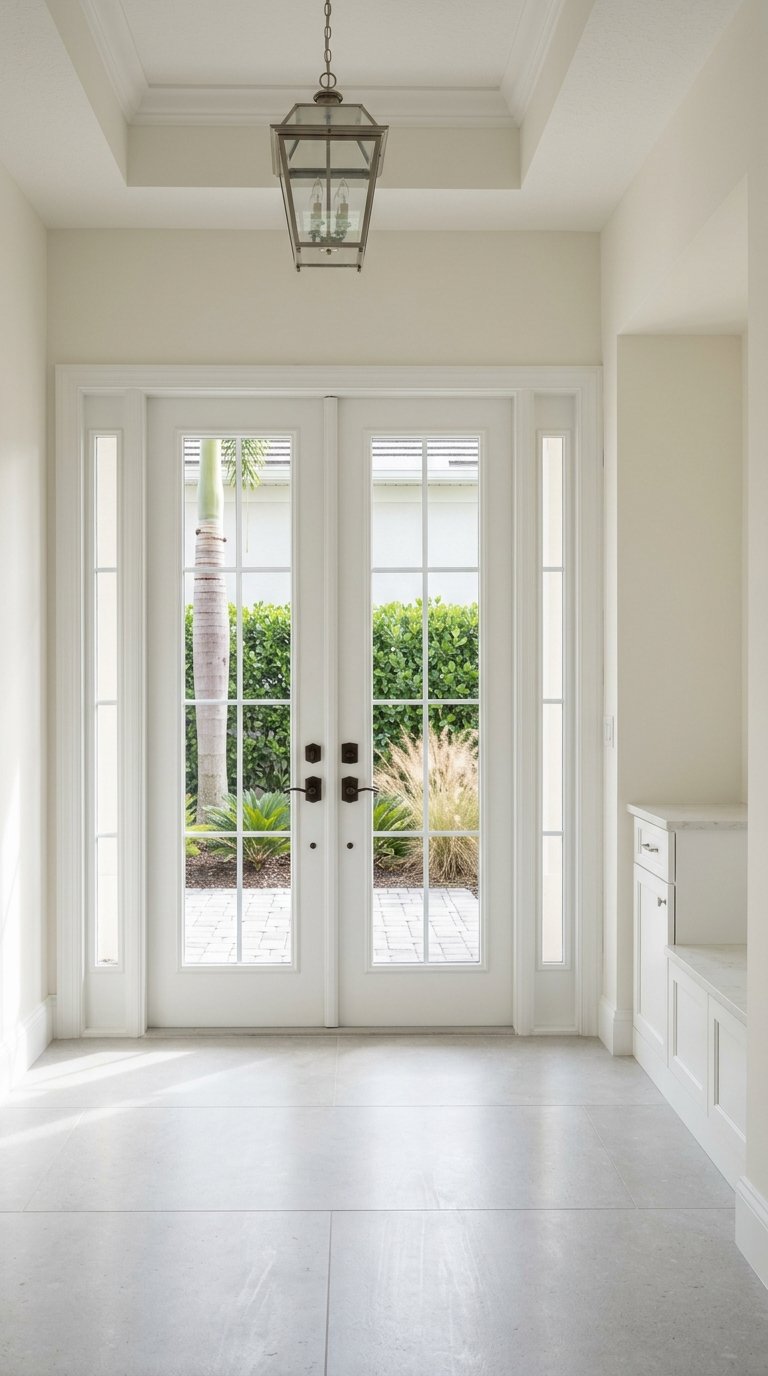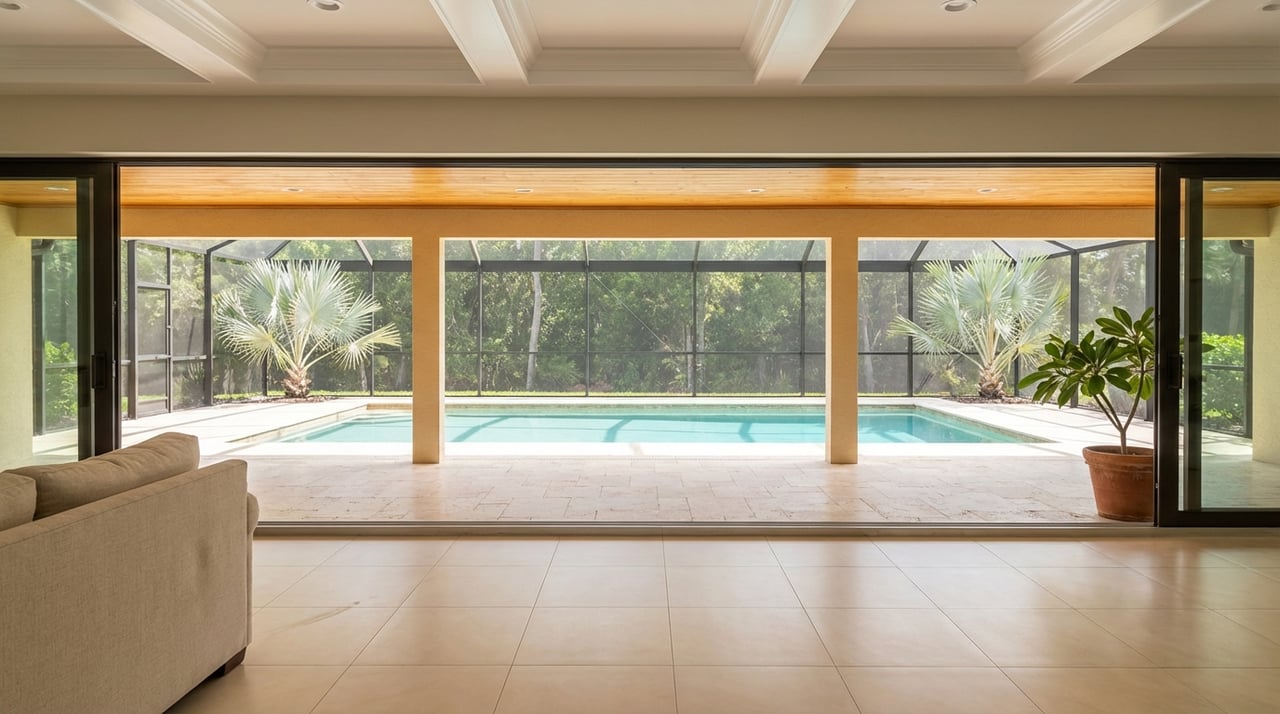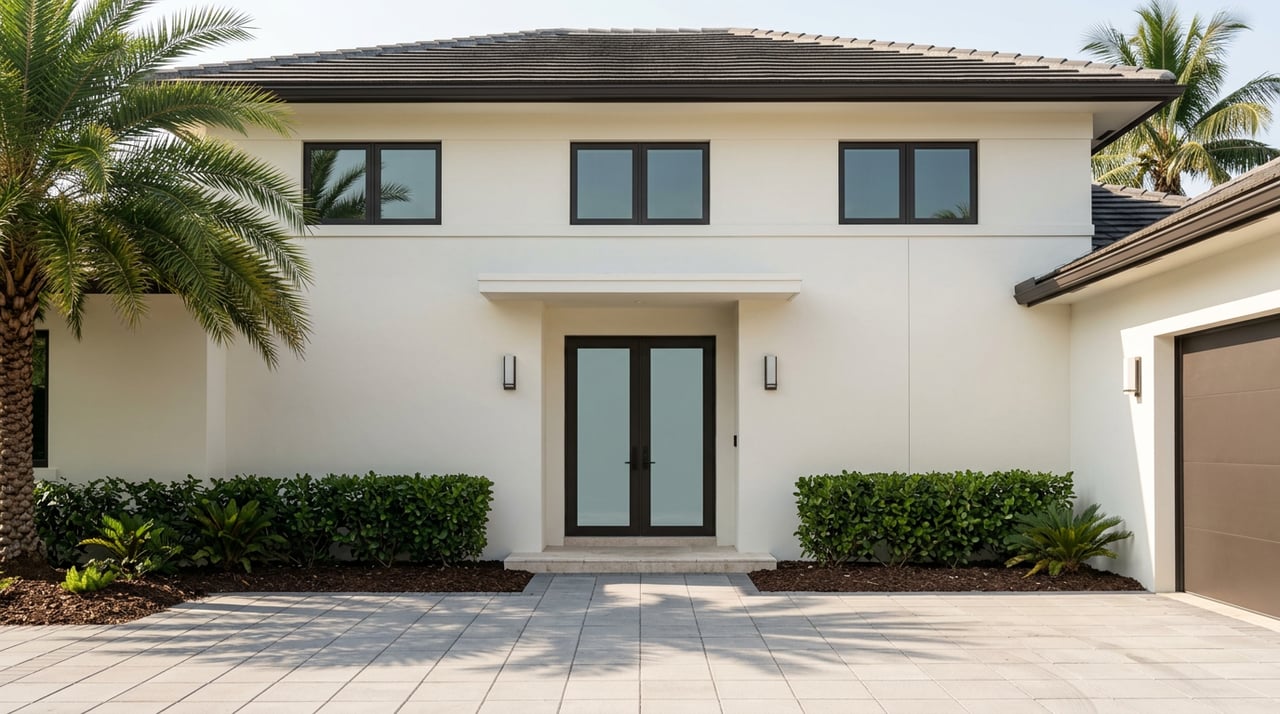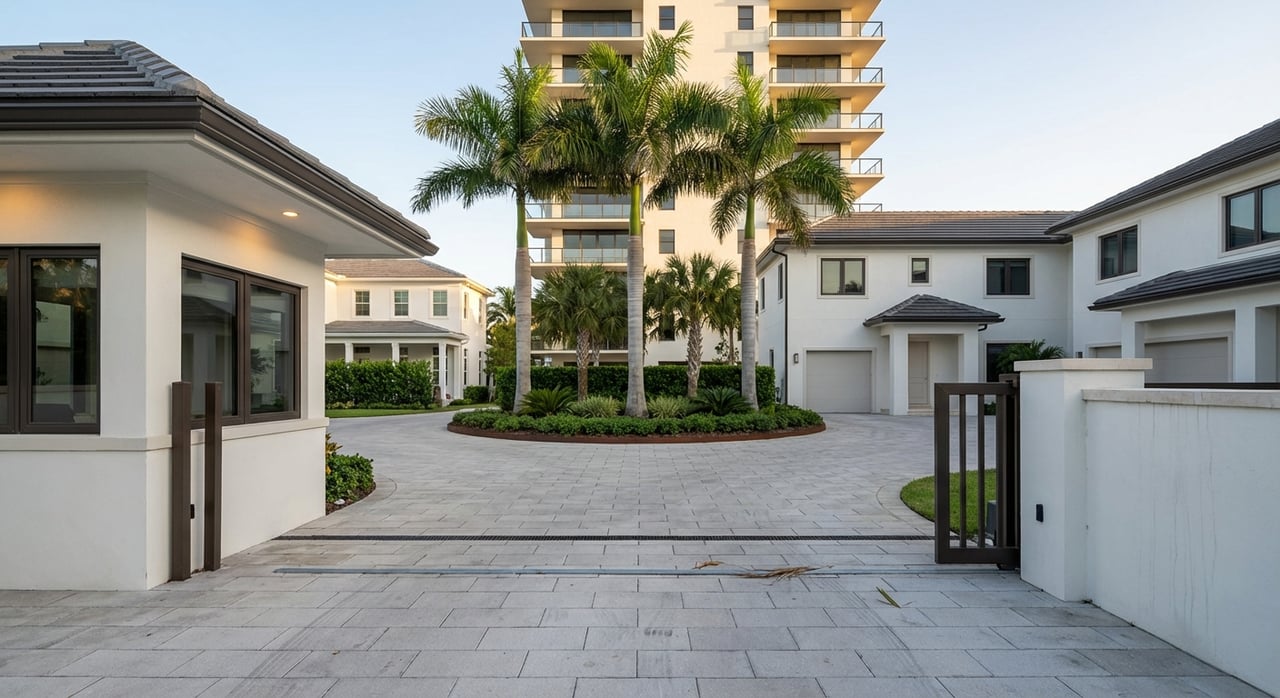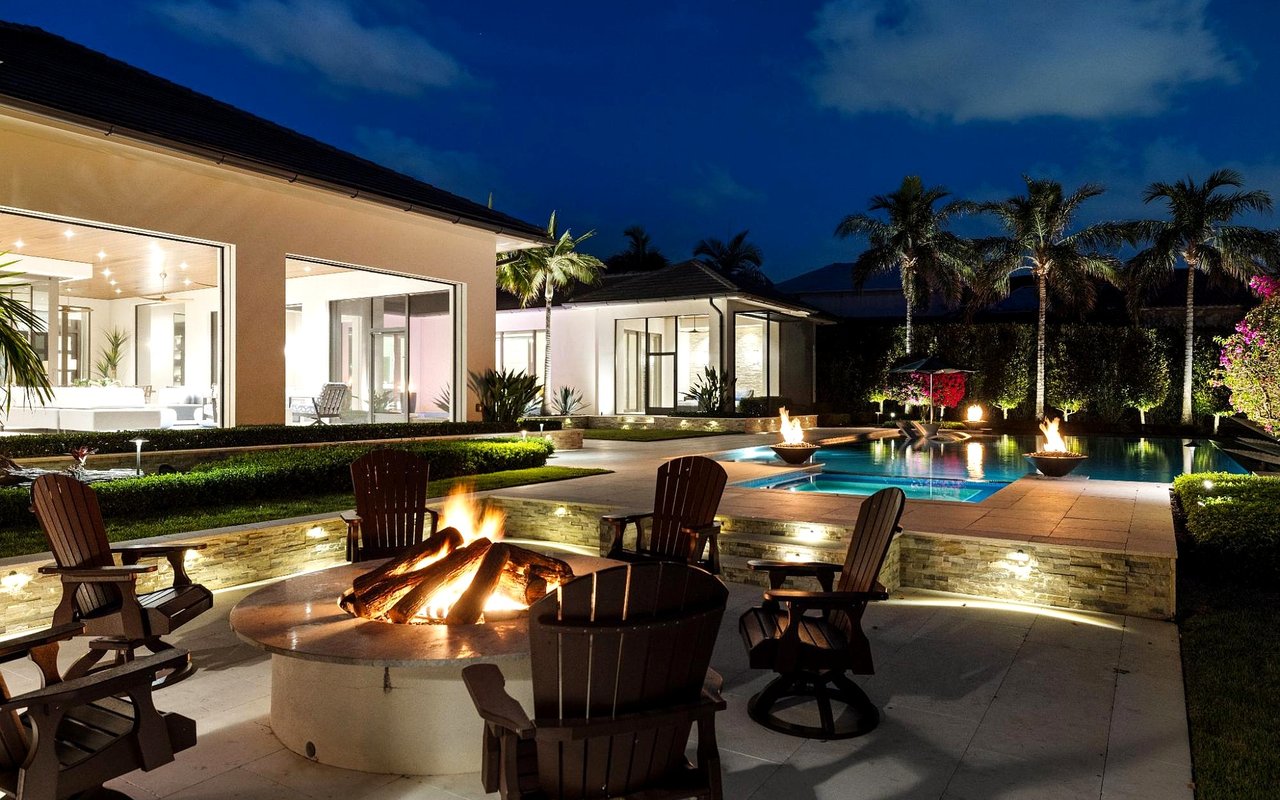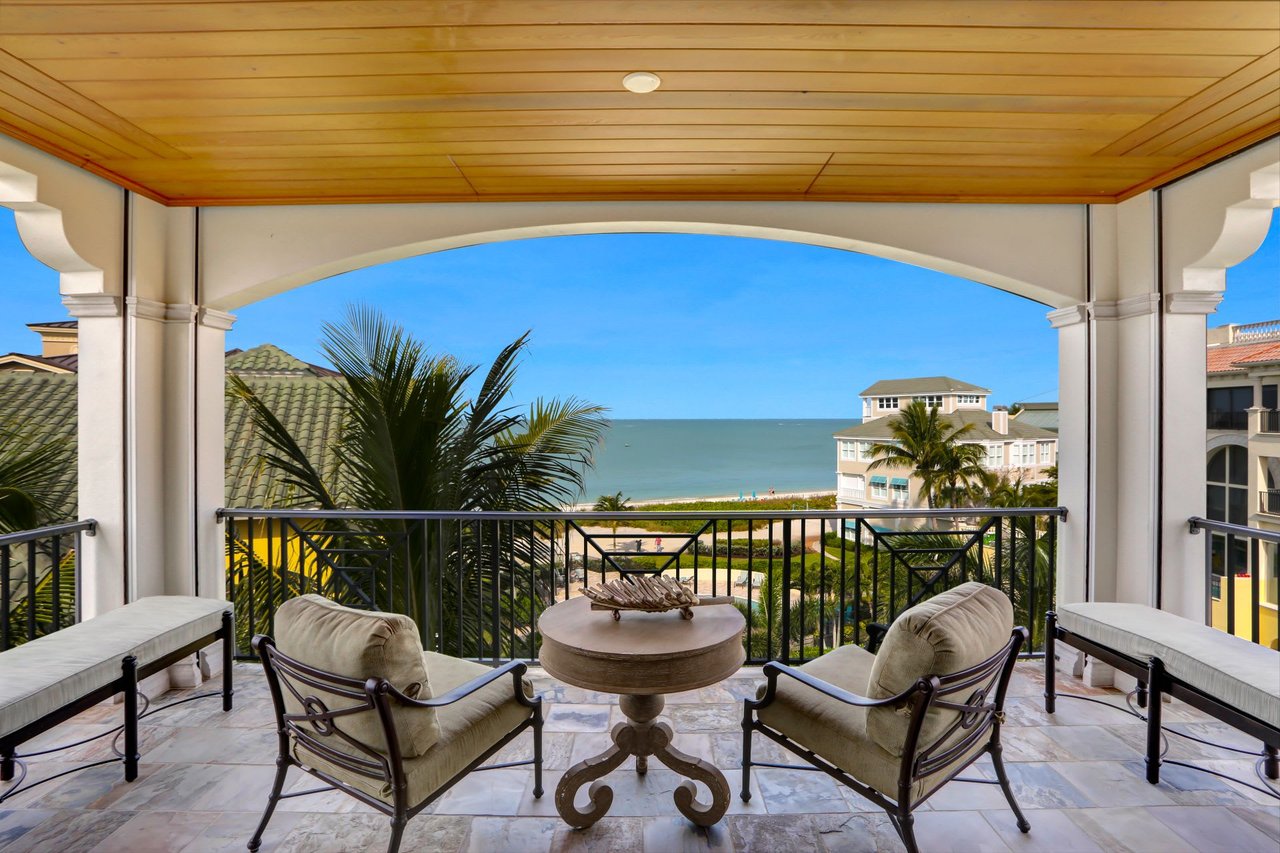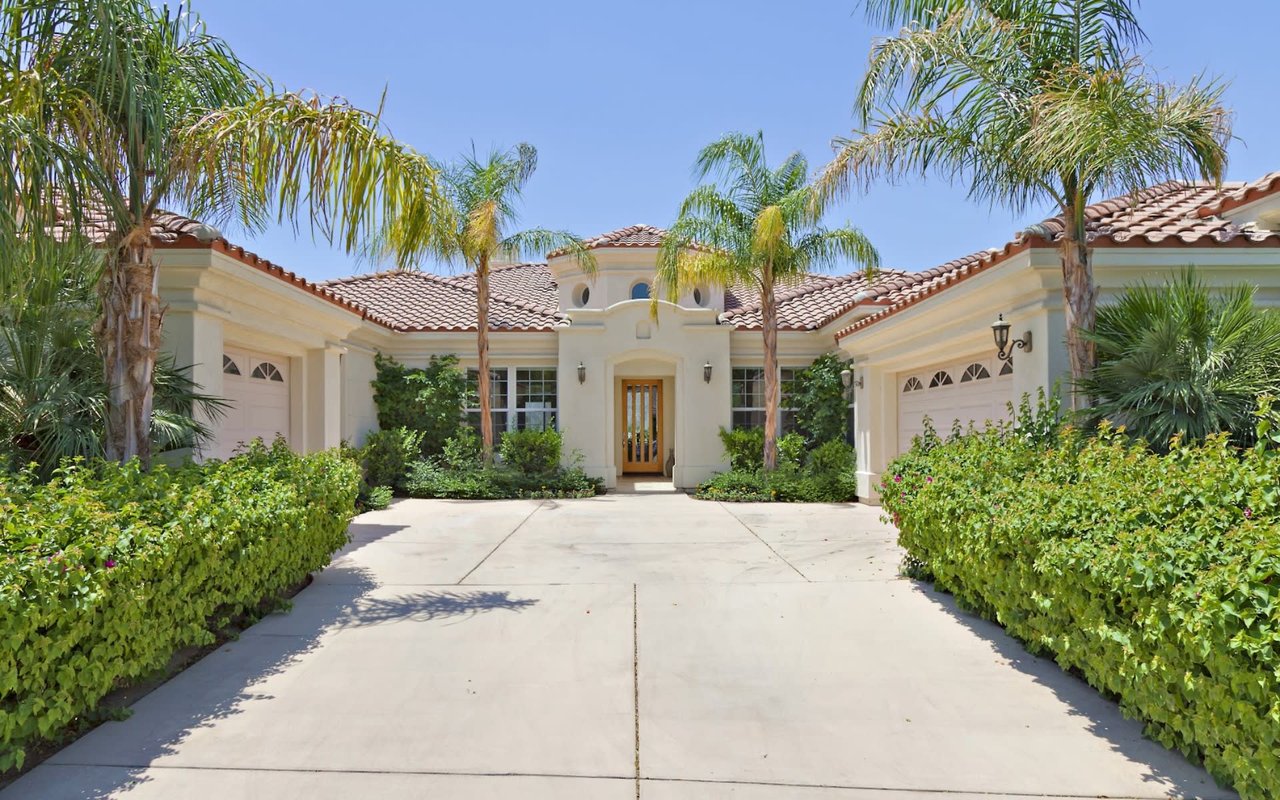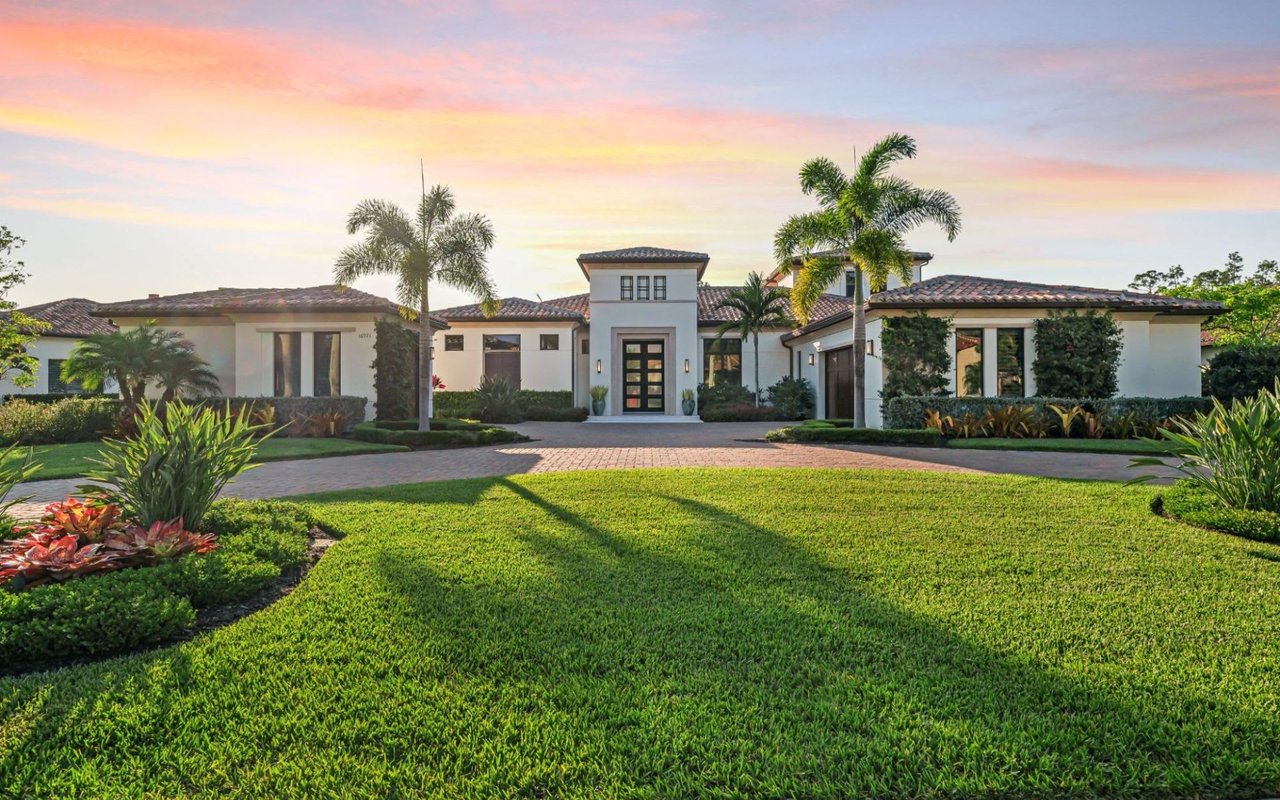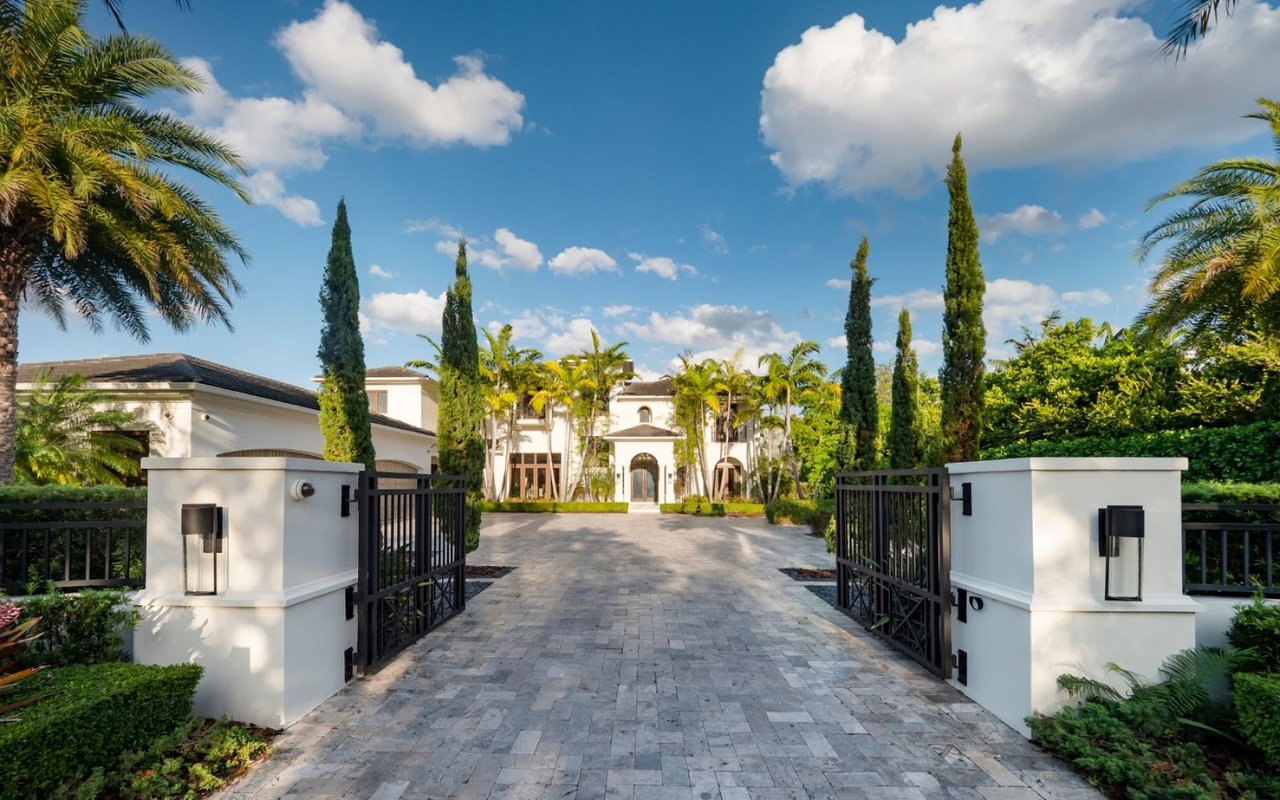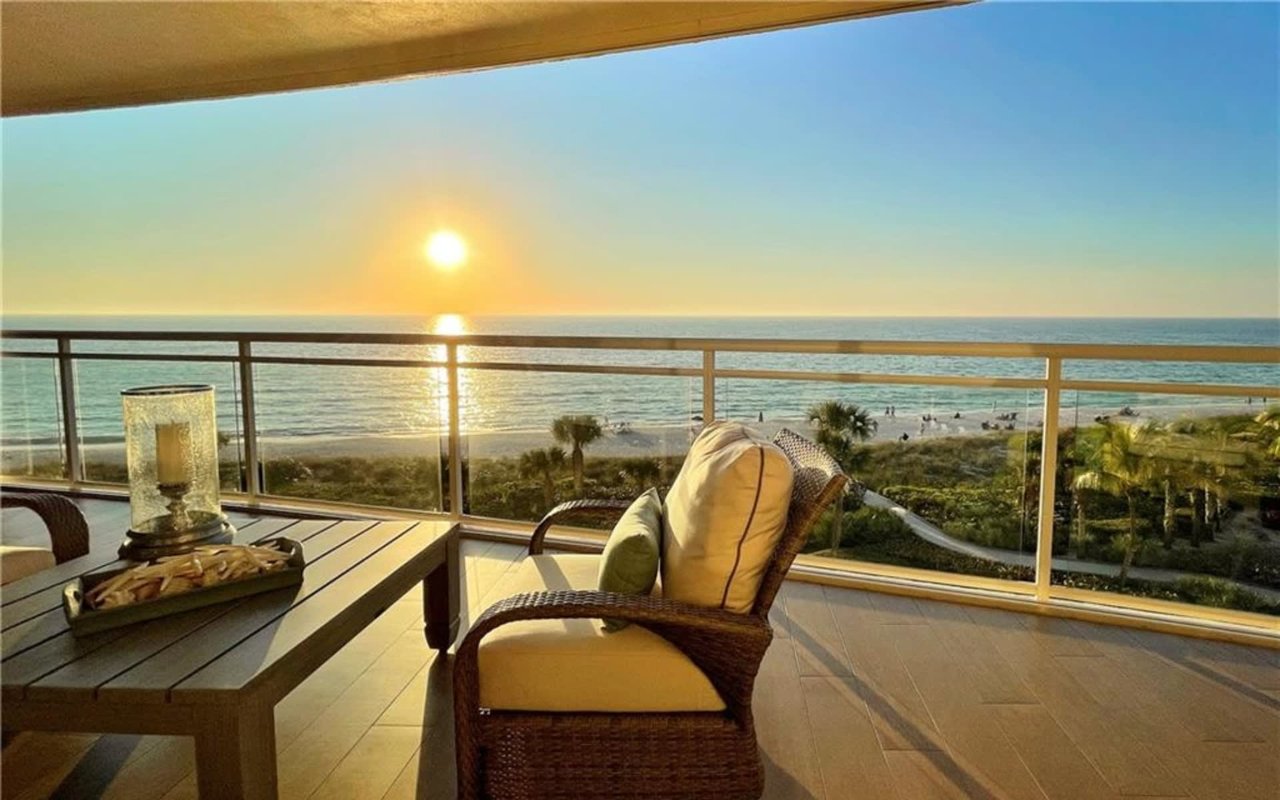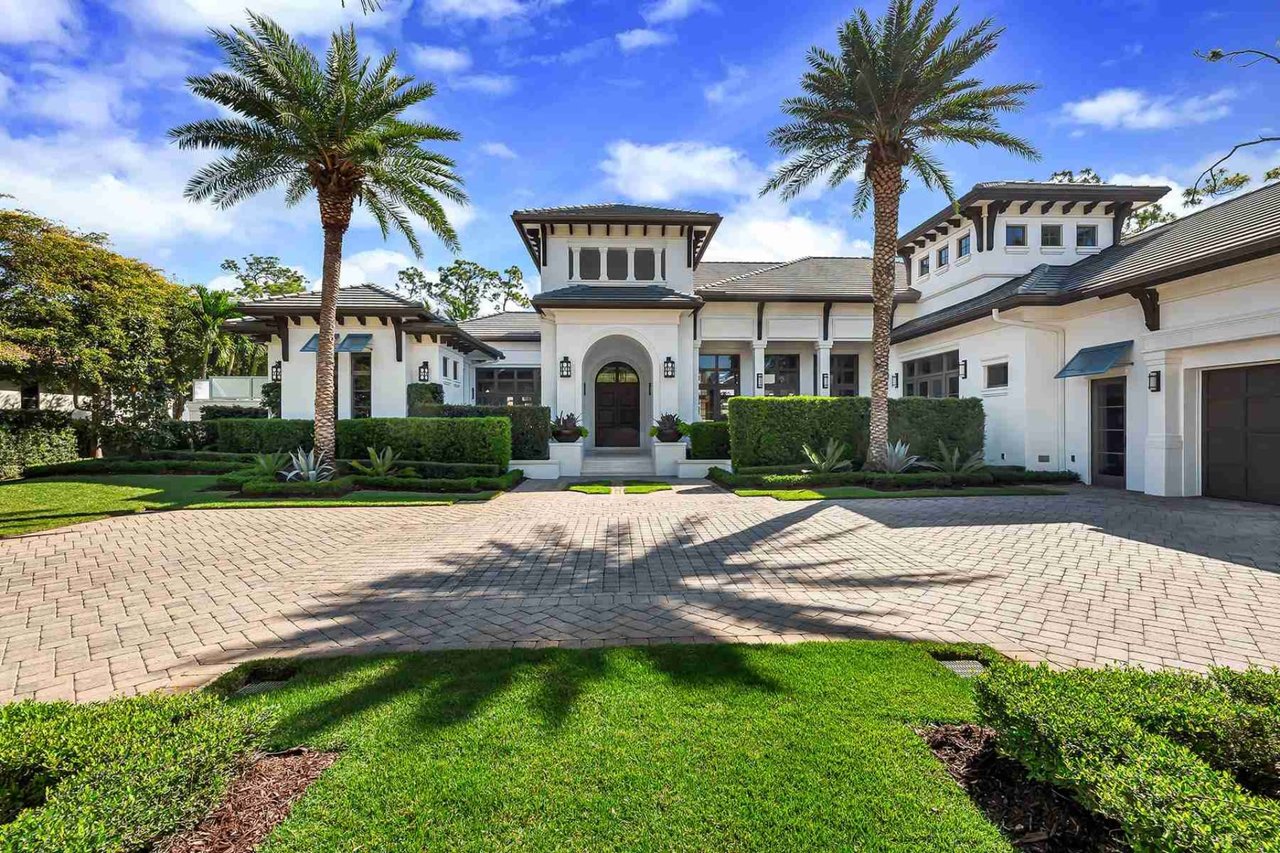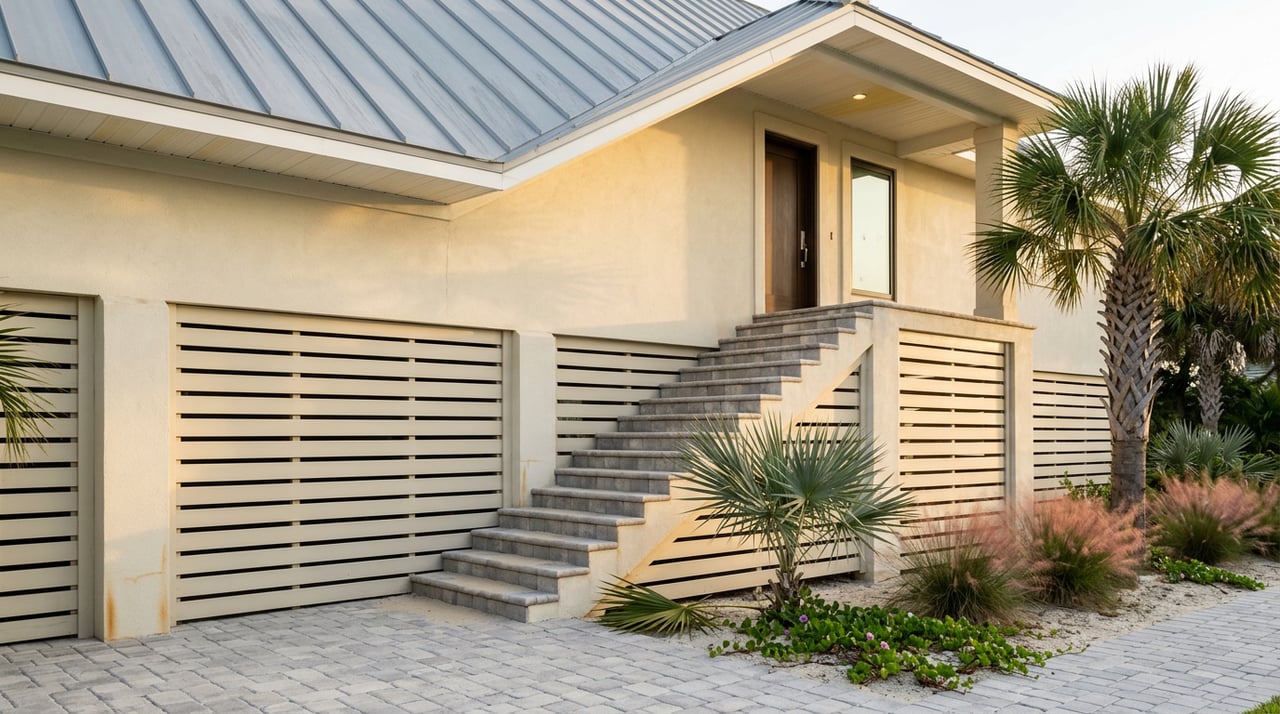
Earlier this year, on the 700 block of Estero Boulevard, four different builders were working six lots where a cluster of beachfront cottages had stood for decades. Realtors Alex King and Marc Taglieri stood on site in February, watching Royal Corinthian Homes pour the first fully concrete house the company has built from the ground up on the island, next to homes going up under three other contractors on the same stretch of sand. Every one of those six houses will be marketed the same way when it hits the market: rebuilt, resilient, move-in ready. Only one of them is Royal Corinthian's first true ground-up project here. The other five carry different construction histories, different permitting paths, and in at least some cases, different obligations that follow the property rather than the builder.
That distinction, not the finish level or the square footage, is the thing worth understanding before you write an offer on this island in 2026.
"Rebuilt" Is Doing A Lot Of Work In That Listing Description
Two very different processes both end up looking like a new house on Fort Myers Beach right now, and the listing sheet rarely tells you which one you are looking at.
The first is straightforward new construction on a cleared or vacant lot. The second is a home that was pushed past Florida's substantial damage threshold, the rule that requires any structure damaged beyond 50 percent of its market value to be rebuilt to current flood elevation rather than simply repaired. Lee County makes that determination, and once a property crosses the line, the owner cannot patch it back to its old footprint. The lowest floor has to reach Base Flood Elevation plus one foot of freeboard. The Town's own FAQ walks through a real example: a home in flood zone AE11 has a Base Flood Elevation of 11 feet, which means the required finished-floor elevation for a substantially damaged or newly built structure at that address is 12 feet.
Both paths get you a hurricane-hardened home. Only one of them comes with a substantial damage determination letter, an under-construction elevation certificate, and a final elevation certificate that a lender or insurer will eventually ask to see. If that paperwork chain has a gap, you inherit the gap.
The Town Was On Probation. That's Your Best Argument For Due Diligence
If you want proof that this paperwork trail is not automatically clean, look at what happened to the Town itself.
After Hurricane Ian, FEMA conducted a community assistance visit and found what a follow-up report later described as incomplete documentation and inconsistent permit records across the floodplain management process. The Town was placed on National Flood Insurance Program probation, which added a $50 surcharge to every federal flood policy in the community and put its 25 percent Community Rating System discount at risk. FEMA gave the Town a list of 252 flagged properties to resolve, along with instructions to remove non-compliant temporary structures and rebuild its permitting documentation, with a compliance deadline landing in mid-November 2025.
Here is the timeline, worth keeping in one place because it explains exactly what your insurance quote depends on right now:
| Date | Milestone |
|---|---|
| November 2025 | NFIP probation lifted after the Town addressed FEMA's compliance deadline |
| December 2025 | FEMA confirms Fort Myers Beach earns a Class 5 Community Rating System designation |
| April 1, 2026 | Most NFIP policies issued or renewed on or after this date became eligible for a 25 percent premium discount |
Town Manager Will McKannay called the Class 5 rating a "gold standard for a barrier island" when it was announced. That is a genuine turnaround, and it is good news for anyone buying here. But it is also a reminder that this was a Town-wide effort to clean up records that had gotten tangled during emergency rebuilding, which means an individual seller's file, especially on a home rebuilt in 2023 or 2024 under pressure, deserves the same scrutiny the Town just applied to itself.
What The Class 5 Rating Actually Changes On Your Quote
The discount has been available since April 1, 2026, but it is not automatic for every policy at every address, and it does not replace the need to check the property's own elevation certificate.
The Town's elevation certificate page explains the math plainly: for roughly every foot a structure sits above its required Base Flood Elevation, annual flood insurance premiums drop by close to 50 percent. Sit a foot below it, and rates roughly double. That is a bigger swing than the 25 percent Class 5 discount on its own, which is why the certificate matters more than the community rating. The average annual flood insurance cost across Lee County currently runs around $1,379, according to NerdWallet figures cited when the Class 5 news broke, so a one-foot elevation gap can move the number by several hundred dollars a year before the community-wide discount is even applied.
When you are evaluating a rebuilt home, ask for the final elevation certificate, not the under-construction estimate that gets filed while the house is still framed. The two numbers are not always the same, and only the final version will support an accurate premium quote or hold up at closing.
The Second Paperwork Trail: Who Actually Built It
Elevation is one thread. Licensing is the other, and it matters more on this island than most because local contractor licenses have been phased out entirely. Every builder working on Fort Myers Beach now has to carry a state license through the Department of Business and Professional Regulation, and that is worth confirming directly rather than taking on faith, especially on spec homes that are still mid-construction when you tour them.
The projects getting attention this year show what a well-documented rebuild looks like. Marvin Homes, a Fort Myers builder with 53 years in the region, broke ground in January 2026 on the redevelopment of the Cottages of Paradise Point at 452 Estero Boulevard, a 12-lot project replacing a rental community wiped out by Ian. The new homes start at $2.6 million, with the first cottage at 2,143 square feet and a later unit planned at 3,607 square feet with a pool built beneath the house. Company president Richard Durling has been explicit that the new structures will sit roughly 15 feet above the ground on concrete pilings, engineered for 160 mile-per-hour winds, with metal roofs and impact-rated openings throughout.
That is a project with a clear paper trail and a known builder history. Not every lot on the island carries the same clarity, particularly where a homeowner managed the rebuild directly or changed contractors partway through, which several owners on the Paradise Point site did on their remaining lots. Verifying the license and the completion history on any home still under construction is a five-minute check that can save a much longer conversation with an insurer later.
Why The Timing Argument Just Got More Expensive
None of this due diligence was urgent when the island's recovery felt indefinite. It is now, because the market signals around it have shifted in the last year.
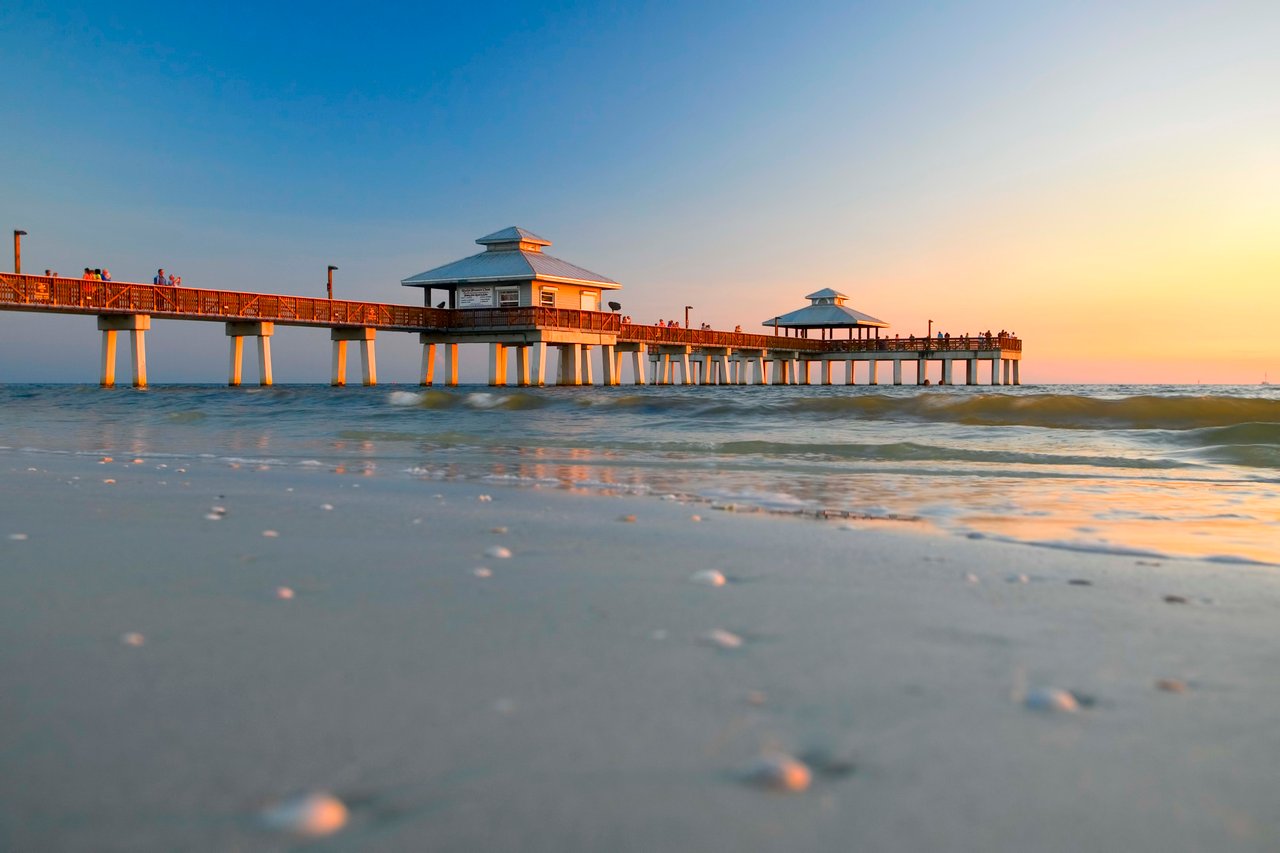
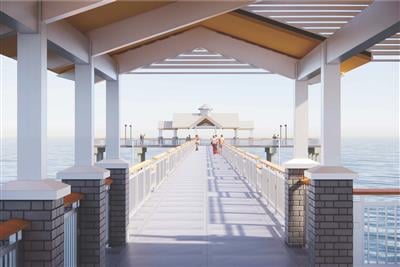
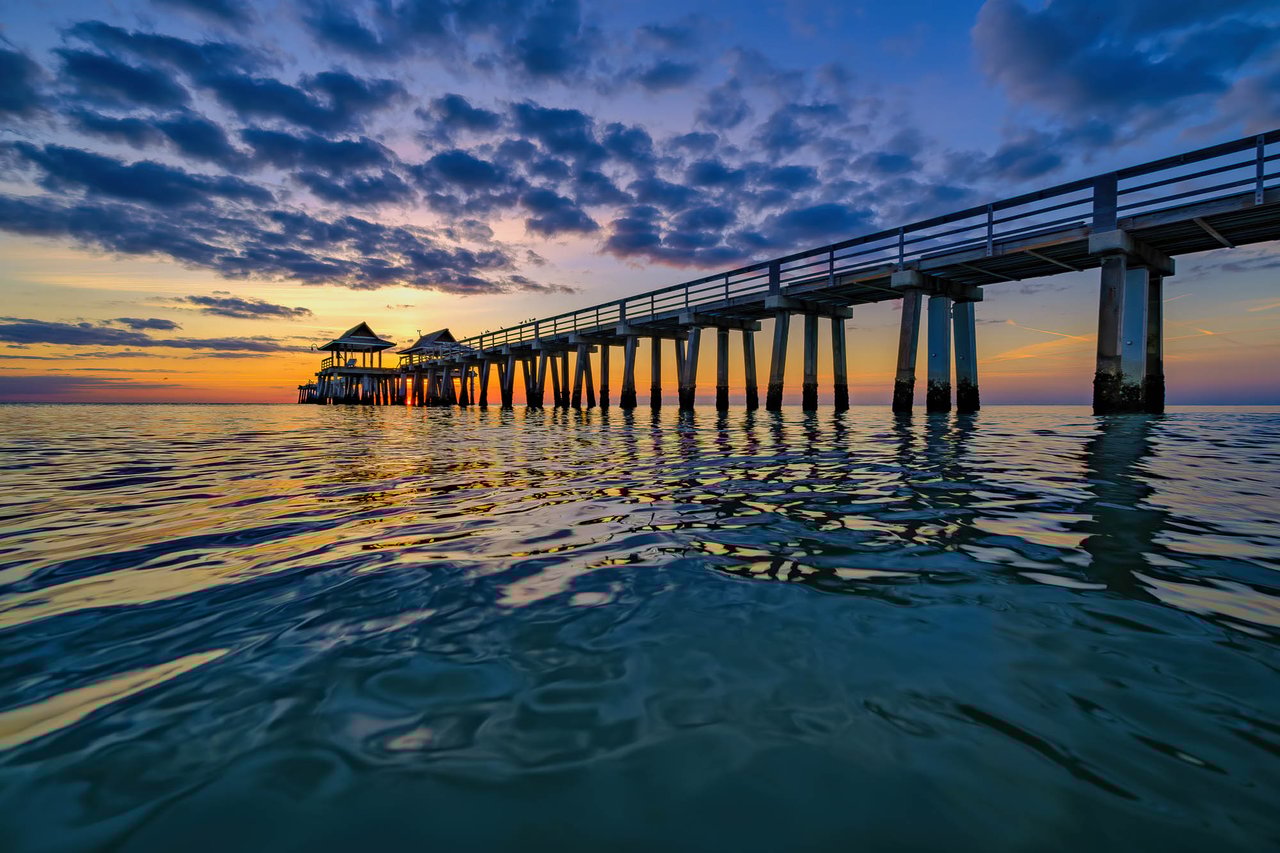
A 10-acre beachfront assemblage on Fort Myers Beach sold for $52 million to Seagate Development Group, the largest post-Ian land transaction on the island and one that reset comparable values for storm-damaged and teardown lots across the barrier island. At the same time, the Fort Myers Beach Pier rebuild, funded in part by FEMA and the Lee County Tourist Development Council, moved its target completion up a full year, from an original 2028 estimate to August 2027, with construction now expected to begin sometime in 2026.
Neither of those facts changes the compliance rules on any single home. What they change is how forgiving the market will be toward paperwork gaps going forward. When comps were flat and buyers were scarce, an incomplete elevation certificate or an ambiguous substantial damage letter was an inconvenience you could negotiate around. As pricing firms up around the pier's milestones and around better-documented new construction, a clean file becomes leverage and a messy one becomes a discount you have to ask for.
Five Documents Worth Requesting Before You Write An Offer
- The final, post-construction elevation certificate for the specific address, not the under-construction version filed mid-build.
- The substantial damage determination letter from Lee County, if the home was rebuilt on an existing footprint rather than built new.
- A flood zone and Base Flood Elevation confirmation pulled for the exact parcel, since zone boundaries can vary within a single block.
- The general contractor's active Florida DBPR license number, verified independently rather than taken from a marketing sheet.
- A current flood insurance quote run against the Town's Class 5 rating and the property's actual elevation, not an estimate based on the community discount alone.
A Few Questions Worth Asking Directly
Does every home on Fort Myers Beach automatically get the 25 percent discount now that it has taken effect? Most NFIP policies issued or renewed on or after April 1, 2026 became eligible, but eligibility depends on the individual policy and property record, not just the Town's community-wide rating. Confirm it with the specific policy, not the headline.
Is a rebuilt home the same thing as new construction for insurance purposes? Not necessarily. A home rebuilt under the substantial damage rule and a home built new on a vacant lot can both meet current elevation and wind standards, but only one of them may come with a documented substantial damage history that a future insurer or buyer could ask about.
Will the pier construction affect property values before it opens? Public commentary around the project suggests pricing may firm as construction milestones are hit rather than waiting for the full 2027 opening, though that is a market expectation rather than a guaranteed outcome.
Buying a home on a barrier island mid-recovery rewards the kind of attention most transactions do not require. The house that looks finished is not always the house whose paperwork is finished, and on Fort Myers Beach right now, that gap is exactly where a good decision gets made or missed.
If you are weighing a purchase on the island and want a second set of eyes on the elevation certificate, the permit history, or the timing against what is happening at Times Square and the pier site, Amy Nease works this market directly and can walk through the file with you before you write an offer. Request a private consultation to start that conversation.