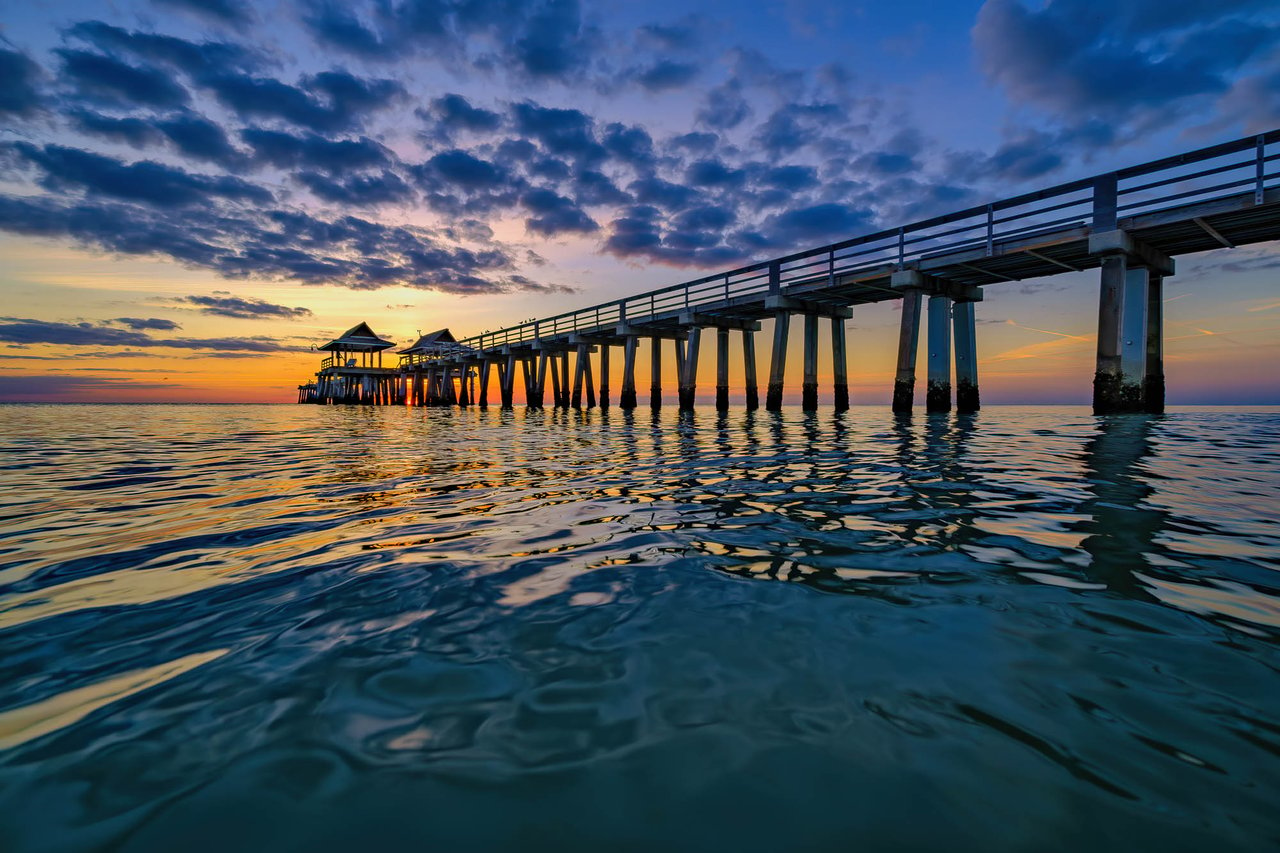
Roughly 10 miles offshore of Gordon Pass, 59 concrete pilings from the Naples Pier now lie on the Gulf floor at Wasmer Reef. They went down on April 24, 2026, eleven days after the City of Naples finished tearing down the old structure at 12th Avenue South. On the beach, the new pier is still a construction site behind fencing, and the City has not moved its July 2027 reopening date.
The Naples Daily News opened its October 6 progress report by calling "When will the new Naples pier be open?" one of the most-asked questions in Collier County. The old pier was not hauled to a landfill. Parts of it went three different ways, and one of those parts can be reached by boat today.
The Pier Has Ended Up in the Gulf Before
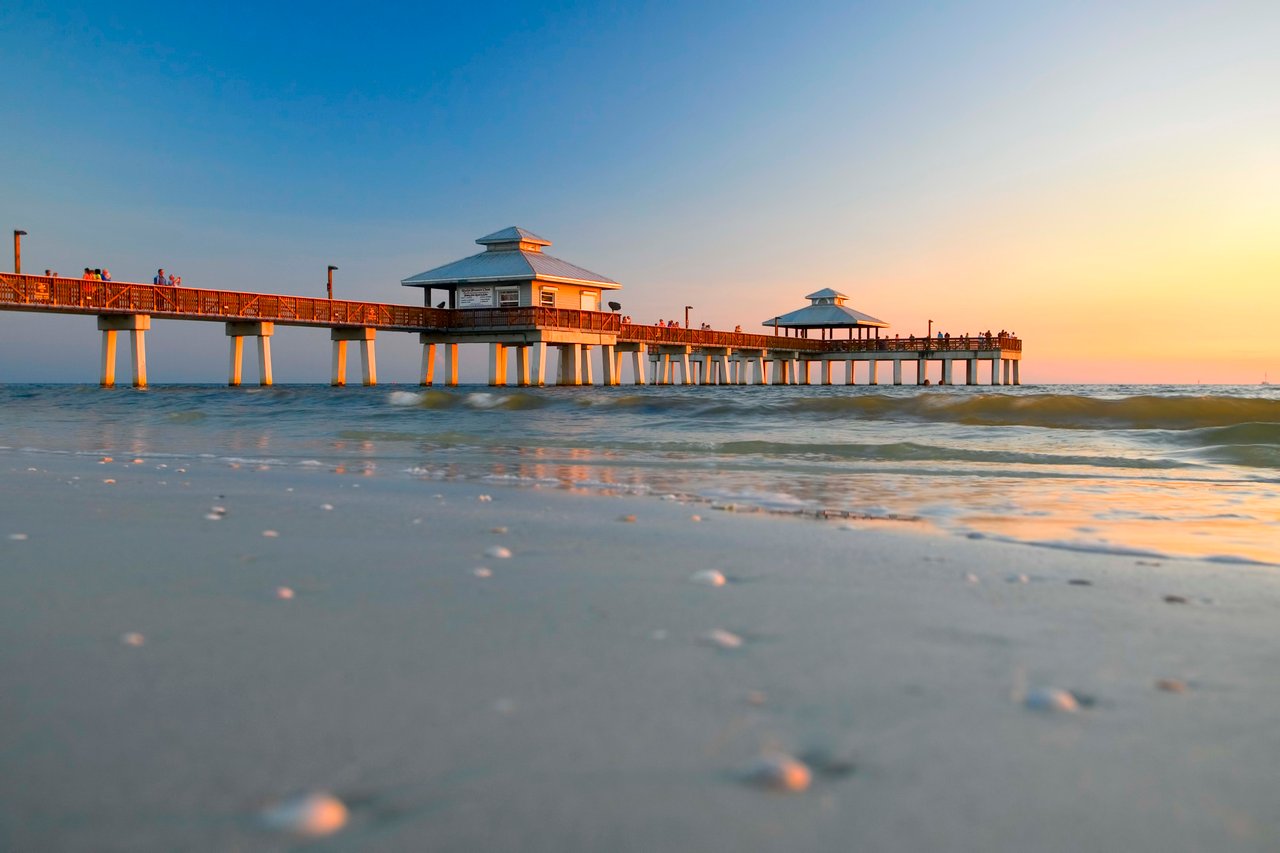
According to the City of Naples rebuild page, the pier has stood since 1888. It was rebuilt after storms in 1910, 1926, 1944 and 1960, renovated in 2015 and damaged again by Hurricane Irma two years later. When Hurricane Ian came ashore near Cayo Costa on September 28, 2022, about 140 feet of the pier landed on the Gulf floor, including the end shelter and more than 30 pilings. Waves also gutted the concession area, the midpoint shelter and the storage rooms. City engineers decided the structure was too compromised to repair and that the whole pier had to be replaced.
In 2026, more of the old pier went into the Gulf, this time at a permitted reef site.
Three Places the Old Pier Went
By spring 2026, the old pier had been split up roughly like this:
- Wasmer Reef. Fifty-nine concrete pilings, part of more than 300 tons of demolished pier concrete, now sit at the reef site offshore of Gordon Pass.
- A recycling facility. WINK reported that the pilings not used for the reef were also kept out of the landfill. They are being processed into recycled concrete aggregate for road construction.
- Mote Marine Laboratory's coral gene bank in Sarasota County. Before demolition, a team from Sea & Shoreline Aquatic Restoration removed some of the coral growing on the old pilings.
The reef is the largest of the three, and the one a Naples boater can actually visit.
What 300 Tons of Pier Concrete Joined Offshore
The City placed the pilings with its rebuild contractor, Shoreline Foundation Inc., and the marine and environmental engineers at Turrell, Hall & Associates. The work ran under a U.S. Army Corps of Engineers permit, and dive teams checked the site before and after the drop to confirm it met the permit's requirements. WINK reports that this was the eighth reef built within the Wasmer site.
The site dates to 2015. WINK says several agencies built it together, paid for with BP oil spill grants and private donations. The name comes from the Wasmer family of Naples, who gave $100,000 for naming rights that year, according to the Naples Daily News at the time. In Collier County's reef inventory, the original 2015 Wasmer modules sit in about 40 to 41 feet of water.
The pilings joined a reef that was already well established. WINK describes Wasmer, now more than ten years old, as home to corals, aquatic vegetation, invertebrates, bivalves and tunicates that give food and shelter to both young and adult fish. The County runs its artificial reef program through the Coastal Zone Management Department. Its stated goals include reef-fish habitat and recreational fishing and diving. For anyone who keeps a boat at the Gordon Pass end of town, a reef trip this winter now includes a stop at the old pier's own concrete.
The Coral That Went North
Some of the old pier's marine life was moved instead of sunk. Gulf Coast News reported on May 7, 2026 that coral rescued from the pilings now lives at Mote Marine Laboratory's coral gene bank in Sarasota County. Nick McMahon, the gene bank's operations manager, identified one rescued specimen as Hidden Cup Coral, Phyllangia americana. The City's project photo gallery also has images of a dive team collecting coral samples, a Mote team with rebuild project manager Bruce Selfon, and samples at the Mote lab.
Speaking to Gulf Coast News about small corals like these, McMahon said:
"These are super small in the big picture, but what they account for and what they provide is worth so much more than that little bit of space."
The pier stood in the same stretch of water for more than a century. A cup coral from its pilings is now kept about two hours north, at a facility built to preserve coral genetics.
What Replaces the Old Pilings
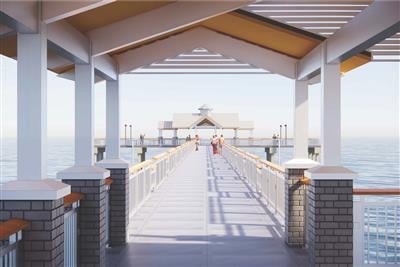
The new pier's design follows from what failed in the old one. The City says the team cut the number of piles and spaced them farther apart to reduce shoreline impacts and erosion. Each pile grew from 14 inches square to 18 inches square, a 65 percent increase, and they come in lengths of 70, 85 and 100 feet, all longer than any pile under the old pier. That extra strength let the City raise the deck three feet higher above the water. The new structure also uses nearly three times as much poured concrete, which the City says improves the odds of the concrete surviving a severe hurricane.
On October 7, 2026, Shoreline Foundation drove the last of the 193 reinforced-concrete pilings. On September 18, crews finished the mid-pavilion pour, which took the project past 50 percent of the concrete it needs. The City puts the total at about 602 cubic yards. Turrell, Hall & Associates led the architectural and engineering design with MHK Architecture.
The deck will feel different from the old one, too. State and federal rules did not allow the old mid-pier concession stand to be rebuilt. City Council chose portable food and beverage carts at the mid-pavilion instead, and approved a small Naples Police and Beach Patrol substation on the pier. The walking surface will be Ipe, a tropical hardwood known for resisting rot. As of July 24, 2026, two-thirds of it had arrived.
The Next Nine Months at 12th Avenue South
The City's schedule for the rest of the build:
- Now through early 2027: Shoreline Foundation finishes the structural work. Electrical work, bathroom and storage renovations and foundation improvements are already underway.
- After structural work is done: Crews install the Ipe decking and the structures on the deck.
- July 2027: Scheduled reopening.
Until then, the City's closure covers the pier, its stairs, restrooms and showers, plus 12th Avenue South west of Gulf Shore Boulevard South. Only the western third of the pier parking lot at 12th Avenue South and Gulf Shore Boulevard South is open. The eastern two-thirds is a staging area. To keep the beach open, the City set up pedestrian bypasses at the Broad Avenue South and 13th Avenue South beach ends. Both stay open for the whole project, and both have restrooms. Restrooms have been a sore point during the build. In March, the Naples Daily News reported beachgoer complaints about the portable toilets and said the City was working on a longer-term fix for the rest of the 18-month build.
For the progress itself, the City posts each milestone, along with photos and videos, on its Naples Pier Rebuild Project page. The next entry should be the first Ipe boards going down on the new deck.
Good construction work holds up over decades, and the new pier was designed to last longer than the old one did. If you are planning a home near the Gulf and want to talk through how a structure is built to stand up to it, Amy Nease is glad to meet with you. Request a private consultation.